
About Sweet Notes
What it is
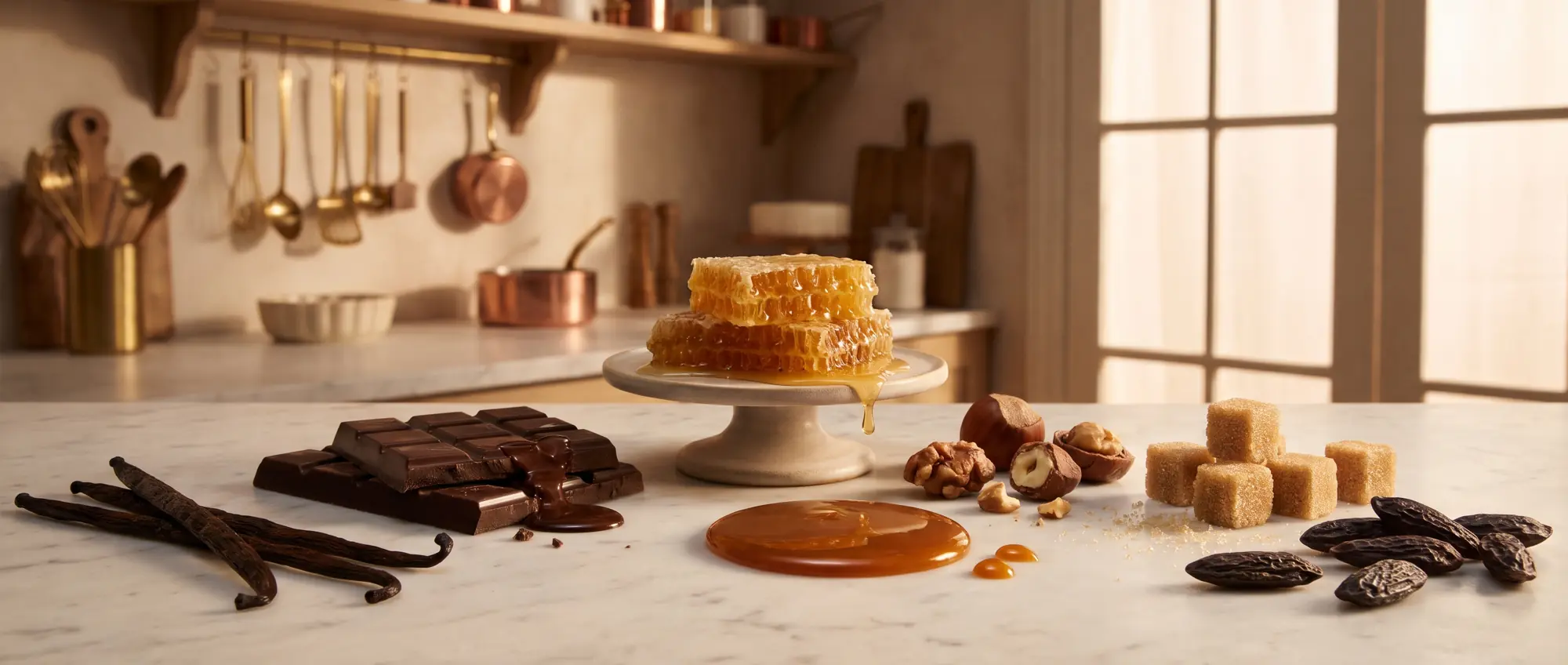
A general descriptor rather than a single material. It stands for a sugary, dessert-like impression in a perfume, built from ingredients such as vanilla, caramel, honey and sugary synthetics.
Where it comes from
It has no one producer or growing region. The sweetness comes from several sources, including vanilla, tonka bean and lab-made molecules such as ethyl maltol, which was patented in the late 1960s.
What it smells like
Sugary and soft, in the direction of candy, caramel and warm dessert. It can lean toward cotton candy and jammy fruit, or toward a bready, toasted sugar tone, depending on what builds it.
In perfumery
Perfumers use it to add warmth and a sugary, rounded finish, and it is most often felt in the heart and base. It softens florals such as rose and jasmine, and it sits well with vanilla, amber, musk, sandalwood and patchouli.
Scent profile
Our read of the note, not a measurement.
Where it sits
Mostly a heart and base note.