
Sandalwood
Also known as Santalum album, Santalum spicatum
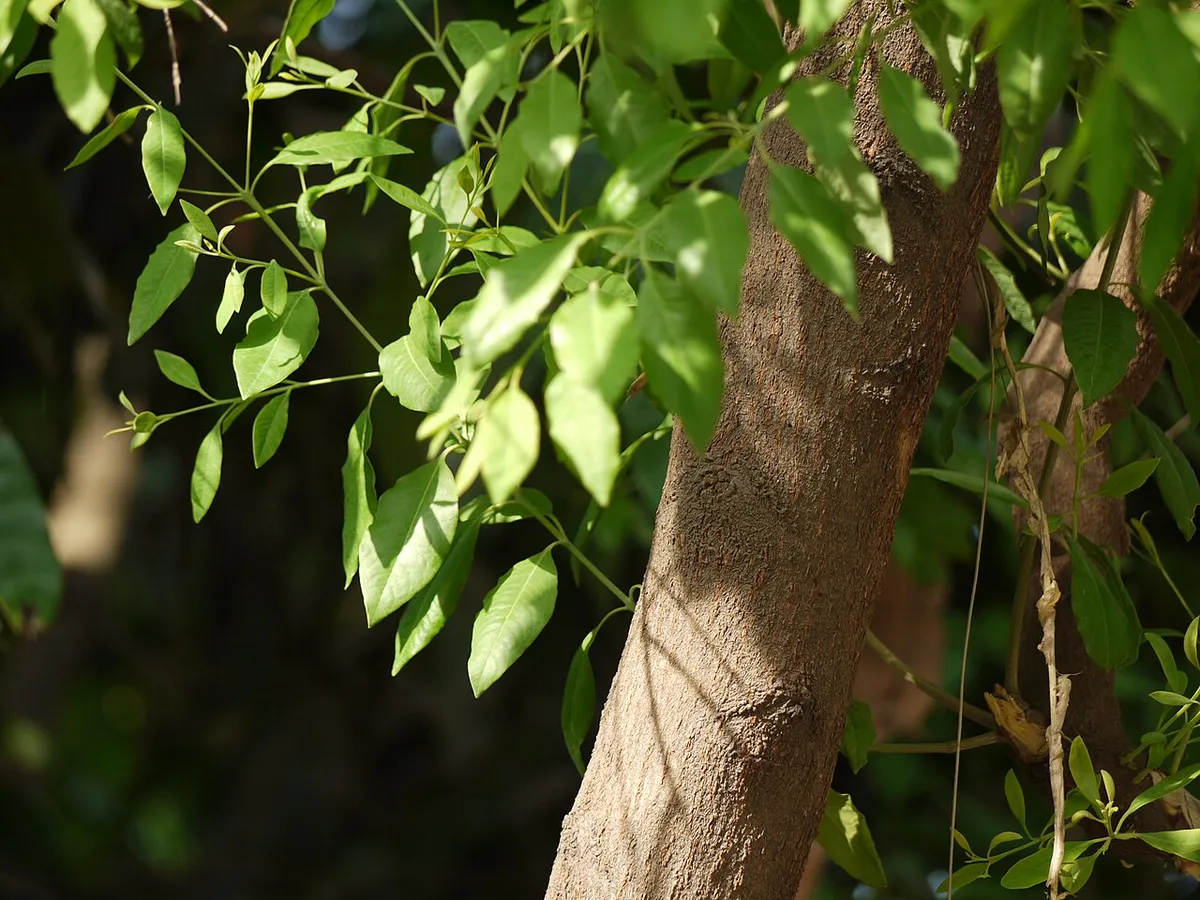
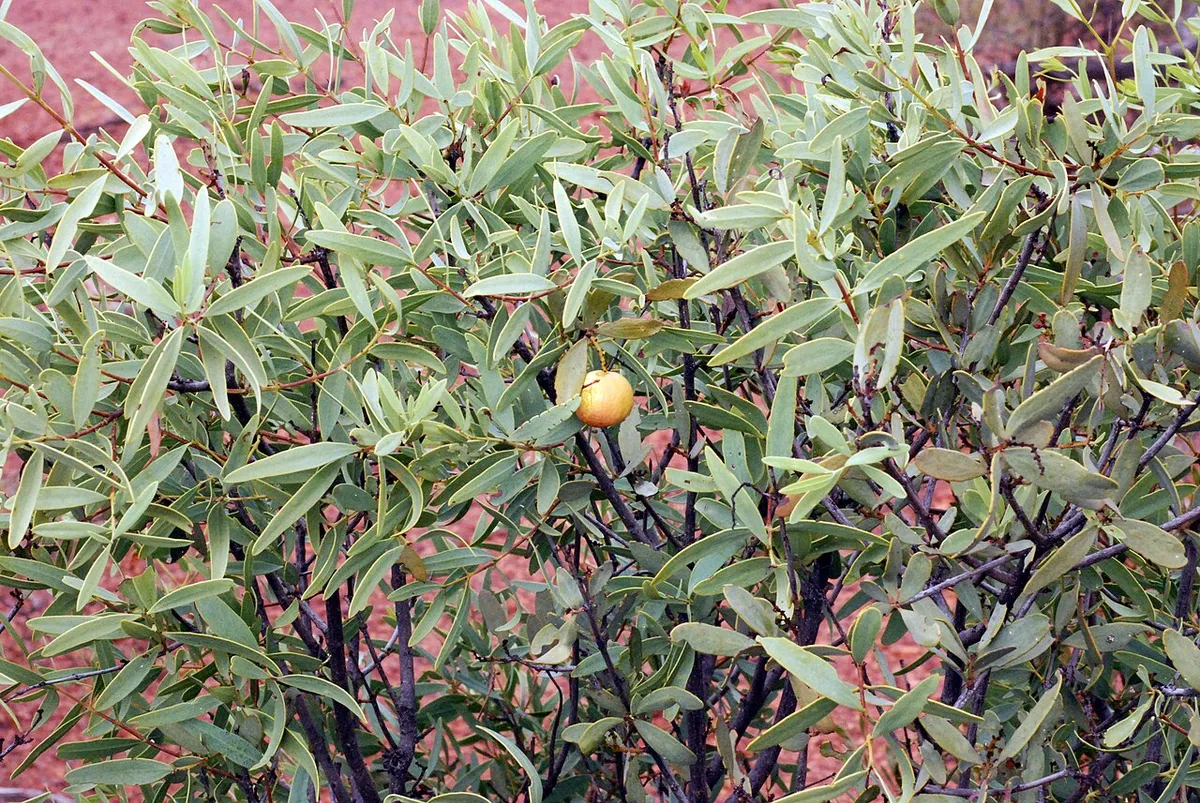
Photos: Dinesh Valke from Thane, India, CC BY-SA 2.0; Jean and Fred Hort, CC BY 2.0
About Sandalwood
What it is
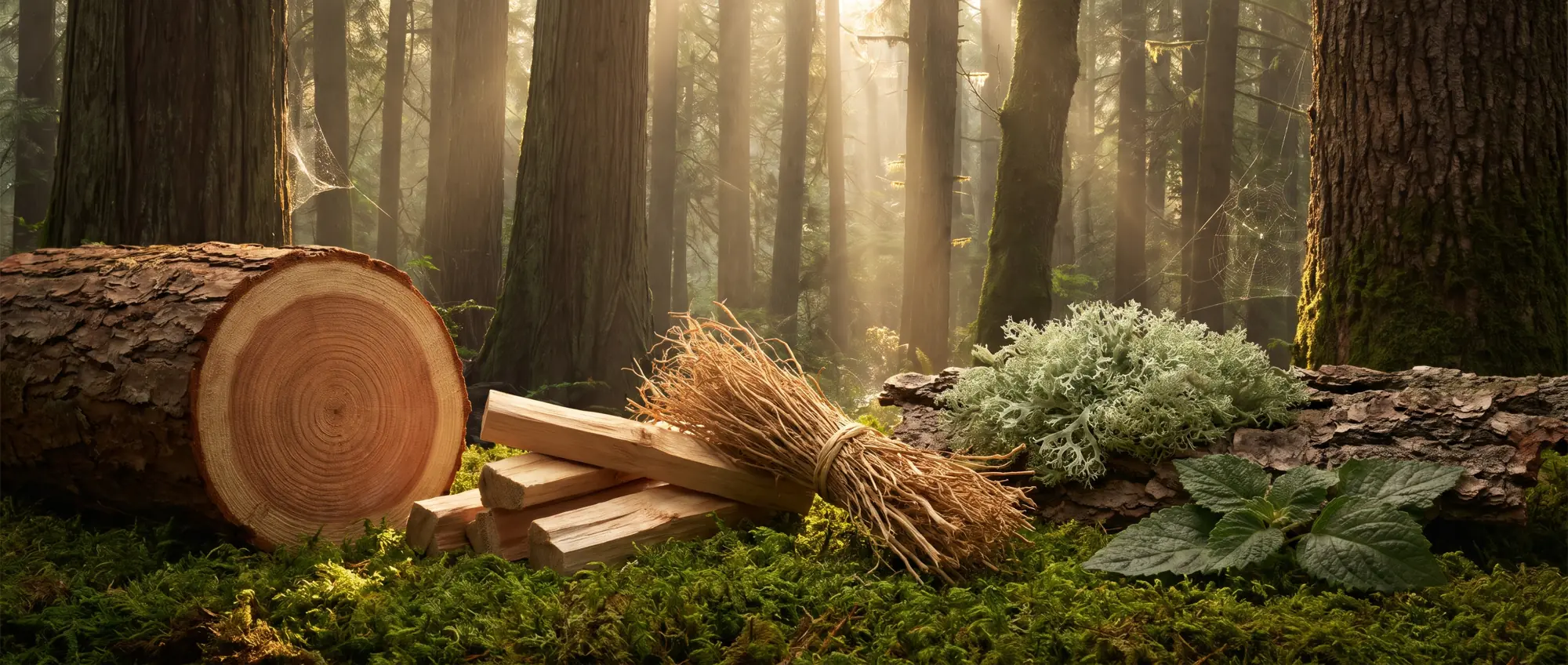
An essential oil steam-distilled from the heartwood of Santalum trees, including chips, billets and root wood. Perfumers also use synthetic molecules to recreate the note.
Where it comes from
True sandalwoods are native to Southeast Asia, Melanesia, Australia and the Pacific islands. Santalum album is now grown in India, Sri Lanka and Western Australia, and Australian sandalwood comes from the semi-arid parts of Western Australia.
What it smells like
Soft, creamy and woody, with a gentle floral warmth. Indian sandalwood reads richer and smoother. Australian sandalwood is drier, with balsamic and slightly peppery tones.
In perfumery
Sandalwood sits mainly in the base, where it adds warmth, softness and staying power. It blends easily with jasmine and other white florals, and with woods such as patchouli and cedar. Because the natural oil is costly, synthetic sandalwood molecules are often used in its place.
Scent profile
Our read of the note, not a measurement.
Where it sits
Mostly a base note.
Kinds of Sandalwood
Drier and softer than Indian sandalwood, with balsamic notes and a peppery top note.
Australian Sandalwood page