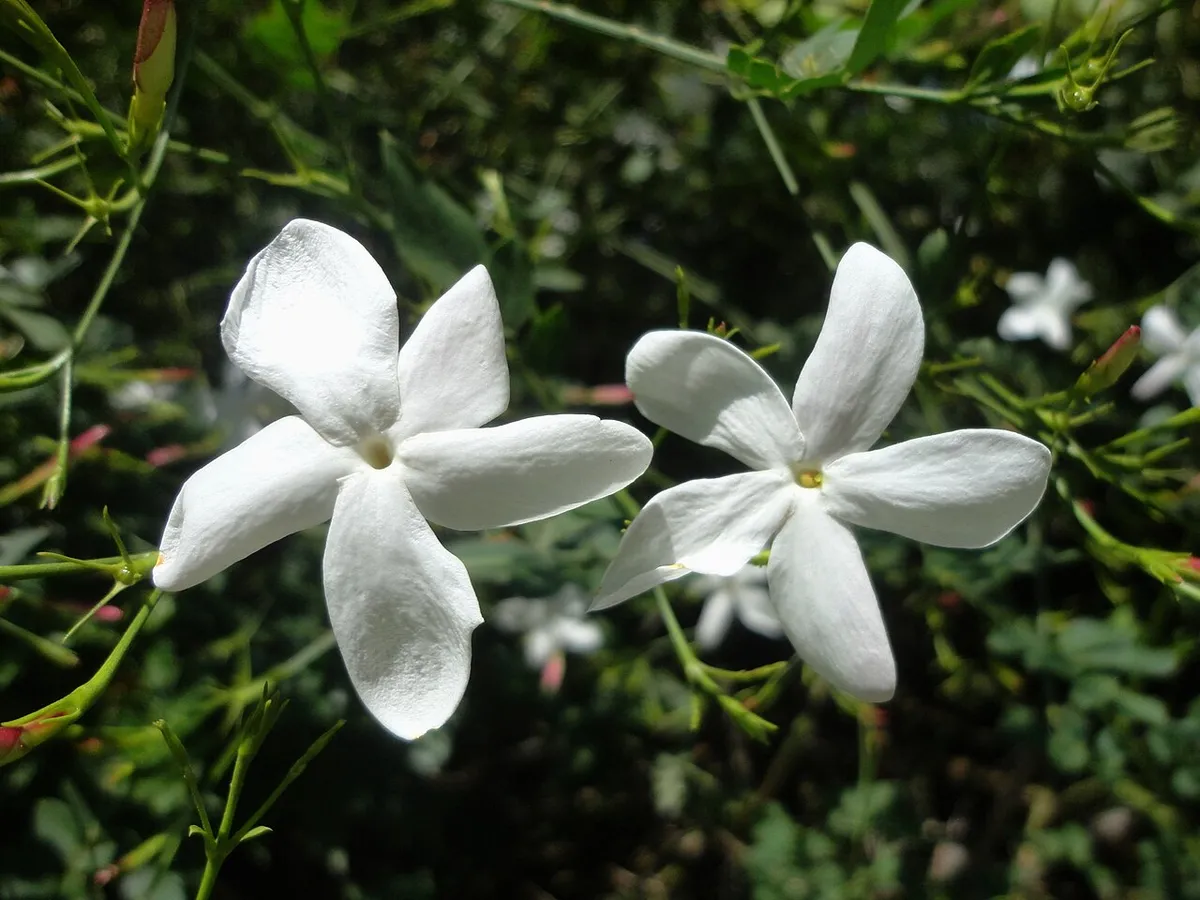
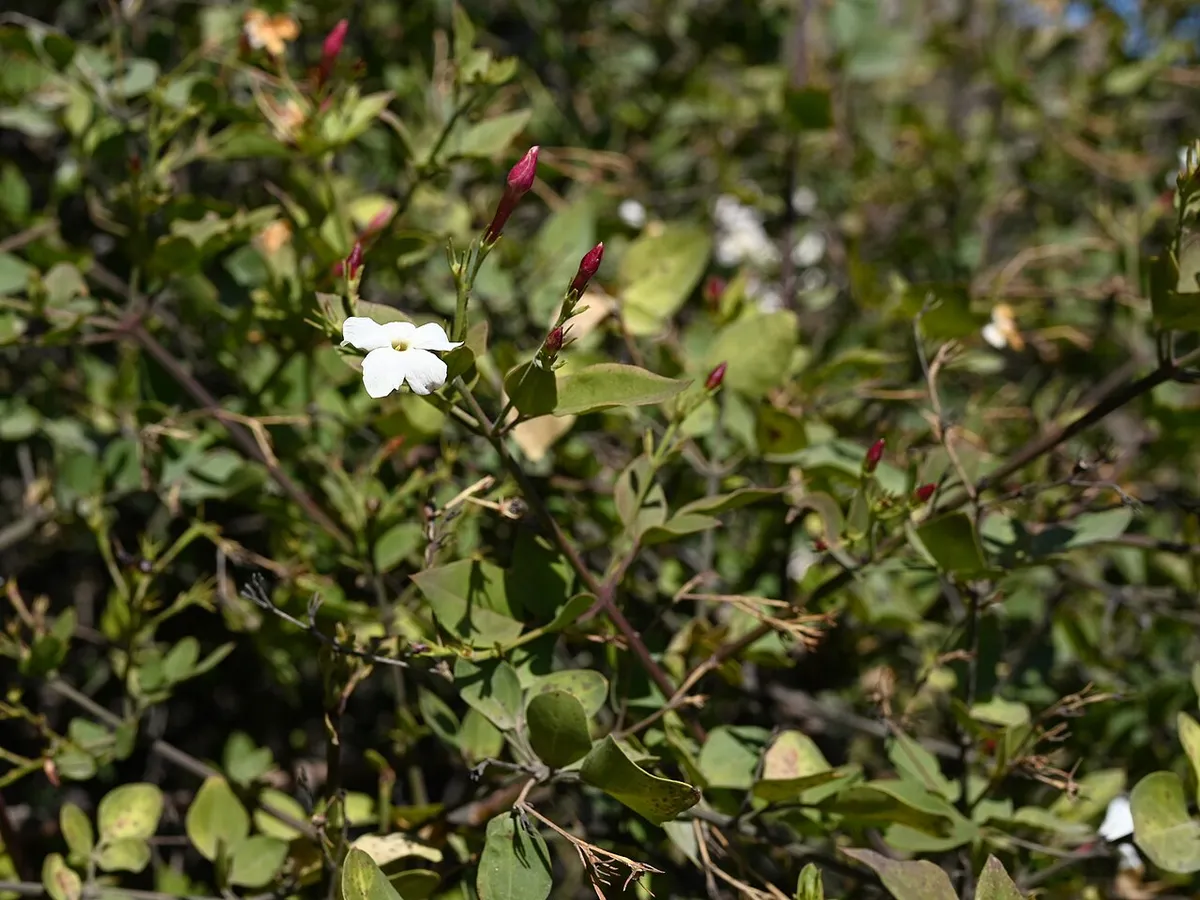

Jasmine
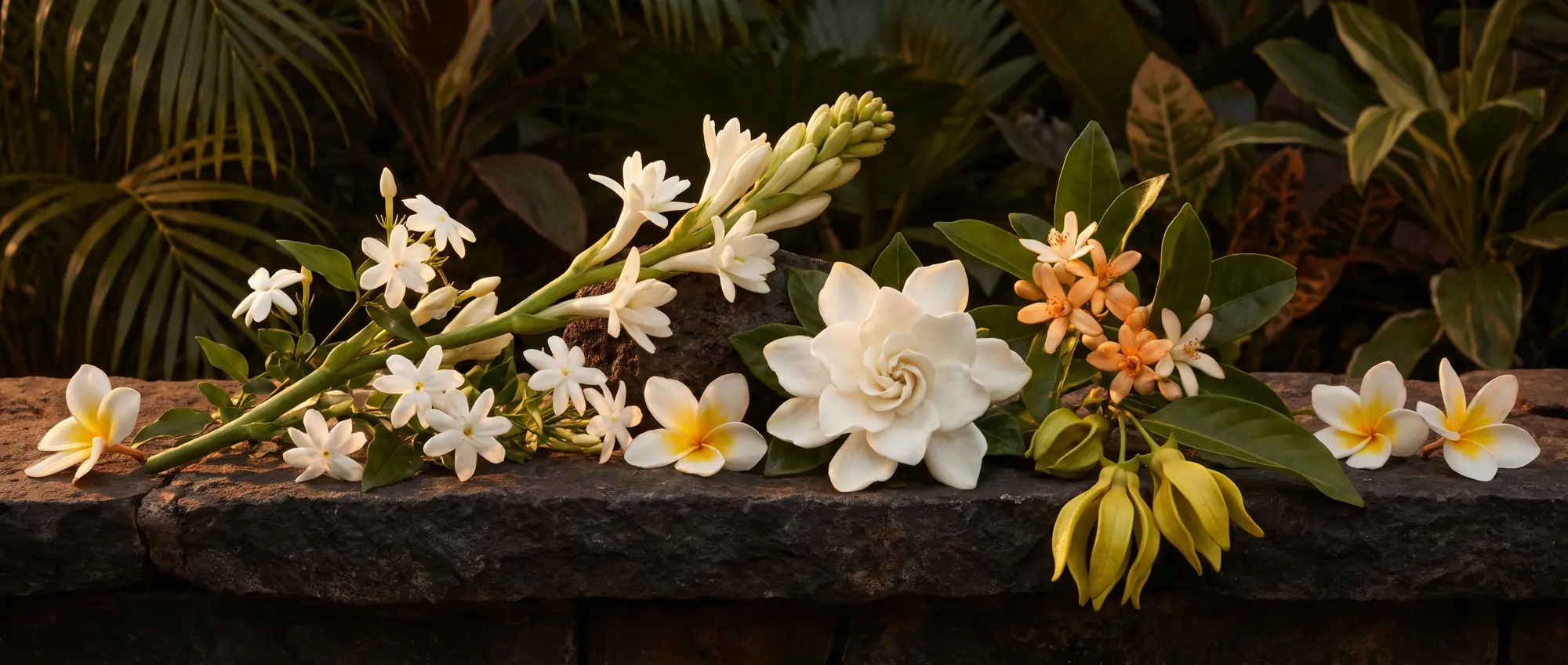
Also known as Jasminum grandiflorum, Jasminum sambac, Jasmin, Jasmine absolute, Jasmin de Grasse
Photos: Juan Carlos Fonseca Mata, CC BY-SA 4.0; Krzysztof Ziarnek, Kenraiz, CC BY-SA 4.0
About Jasmine
What it is
Jasmine is usually an absolute made from the flowers of Jasminum grandiflorum or Jasminum sambac. The flowers are too delicate for steam distillation, so the oil is taken by solvent extraction, or traditionally by enfleurage. Lab-made jasmine materials are also widely used.
Where it comes from
The plant is said to originate in India. It was first cultivated in Provence in the sixteenth century, and Grasse is its historic centre. Today most grandiflorum absolute comes from Egypt and India, with a small amount from Grasse. Sambac absolute comes mainly from India.
What it smells like
Rich, sweet and floral, with fruity facets that recall apricot or banana. It also has an animalic, indolic side that makes it feel warm and skin-like. Sambac reads darker, greener and more animalic than grandiflorum.
In perfumery
Jasmine is mostly a heart note. It lifts floral compositions and gives them structure and body. It is often paired with musk, bergamot, sandalwood, vanilla, amber, rose, patchouli and cedar. Synthetic jasmine materials are used for radiance and freshness without the strong animalic tone.
Scent profile
Our read of the note, not a measurement.
Where it sits
Mostly a heart note.
Kinds of Jasmine
Darker, greener and more animalic than grandiflorum, with more indoles. Its flowers are also used to scent Chinese tea.
Jasmine Sambac page