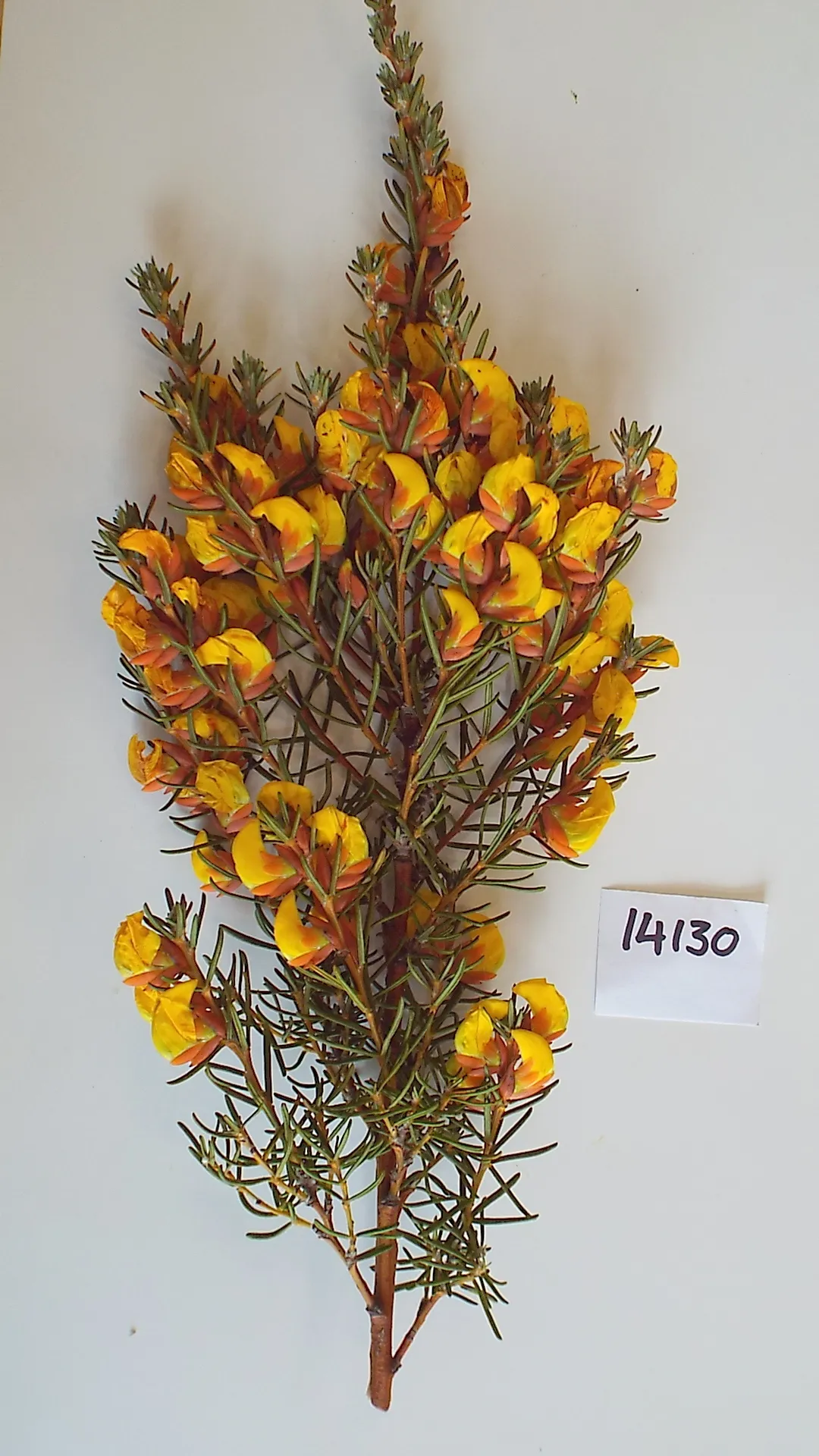

Honeybush or Cyclopia
Also known as Cyclopia, heuningbos, bergtee
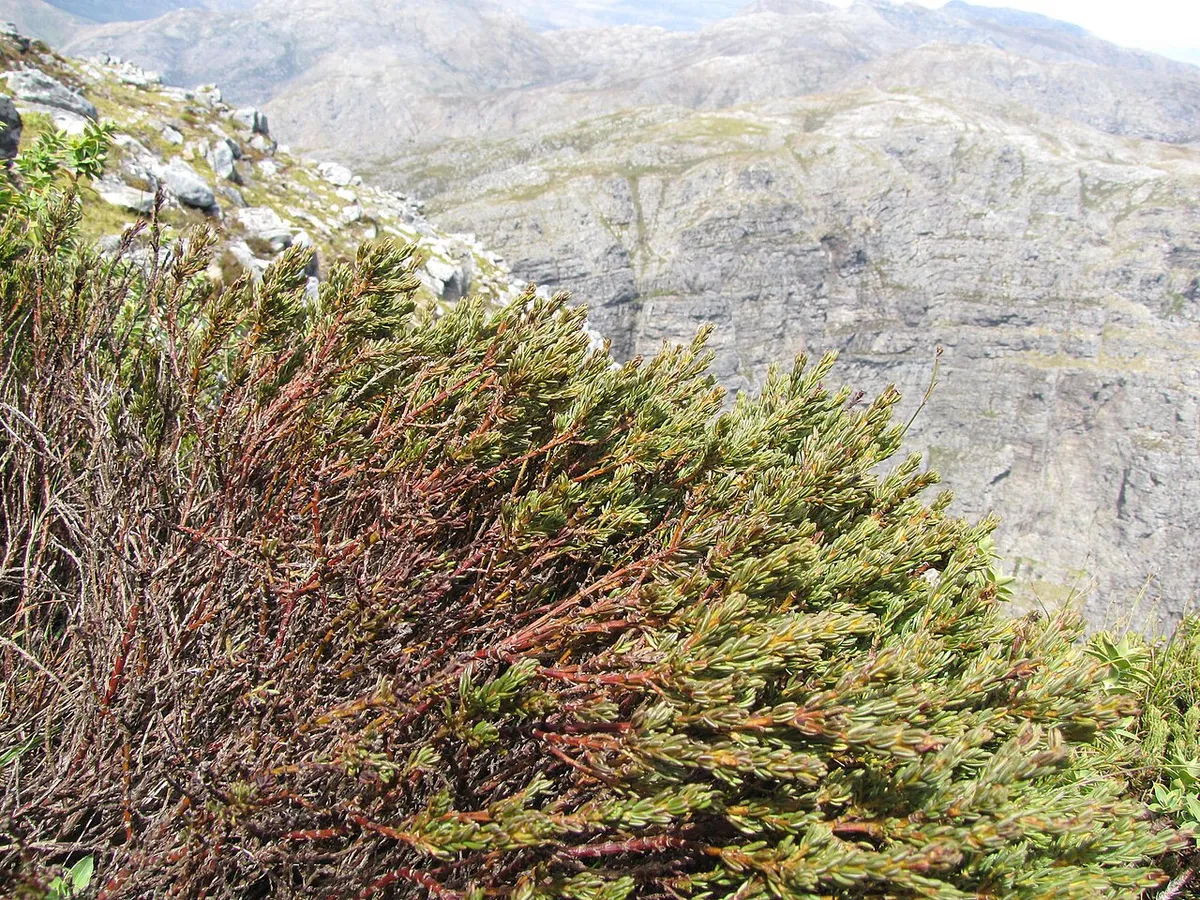
Photos: Nick Helme, CC BY-SA 4.0; Charles Stirton, CC BY-SA 4.0
About Honeybush or Cyclopia
What it is
A supercritical CO2 extract made from the leaves of Cyclopia intermedia, a South African shrub in the legume family. The plant is better known as the leaves used for honeybush tea.
Where it comes from
The genus Cyclopia grows only in the southern and southwestern Cape Provinces of South Africa. Perfumery material is made by specialist suppliers from the cultivated and wild leaves of the plant.
What it smells like
The opening is sweet honey with a faint wine-like edge. It settles into mild honey and hay, with a waxy warmth like beeswax and a clean, medium black tea character. The strength is high, so a little goes a long way.
In perfumery
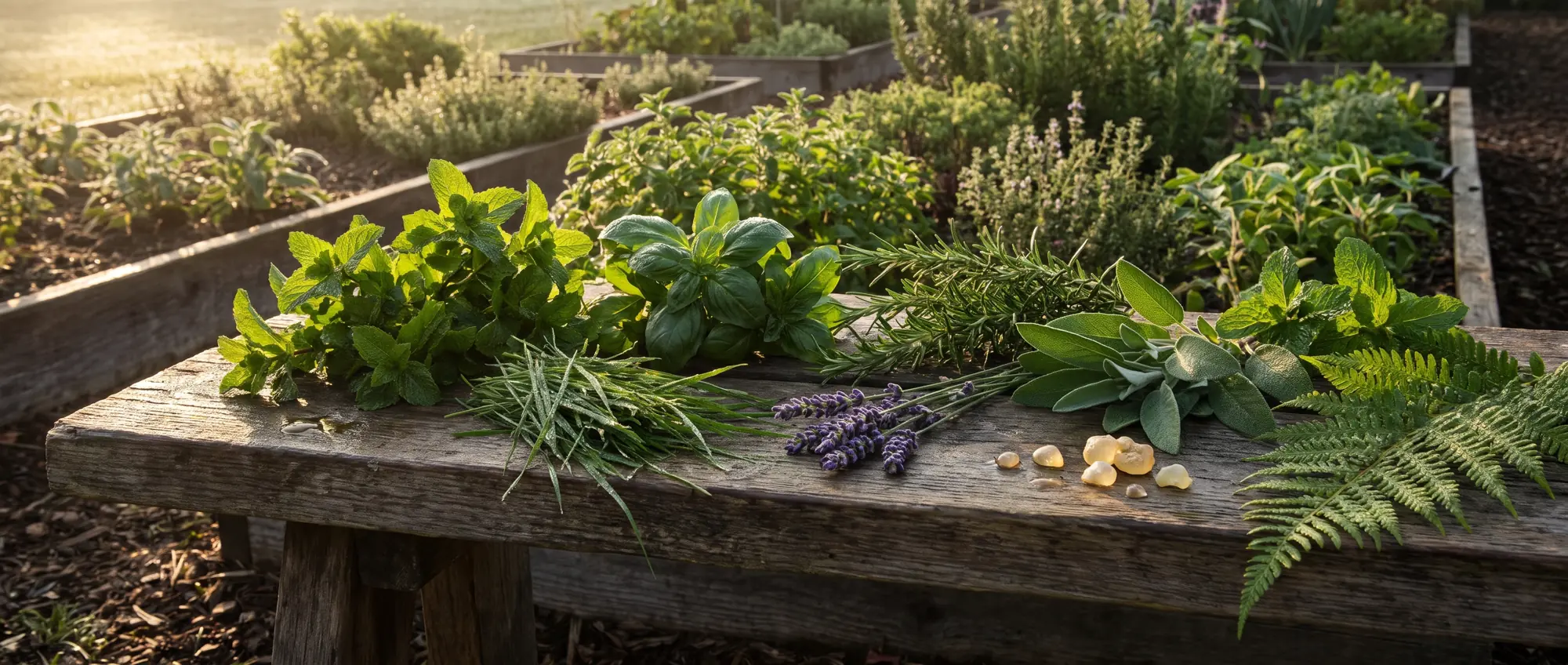
Perfumers use honeybush to give a honeyed sweetness and a tea-like dryness to a blend, and it can stand in for a tea accord. It is often paired with beeswax, honey, jasmine and orange blossom, and it sits well beside a rose or a tuberose-style floral heart.
Scent profile
Our read of the note, not a measurement.