

About Honey
What it is
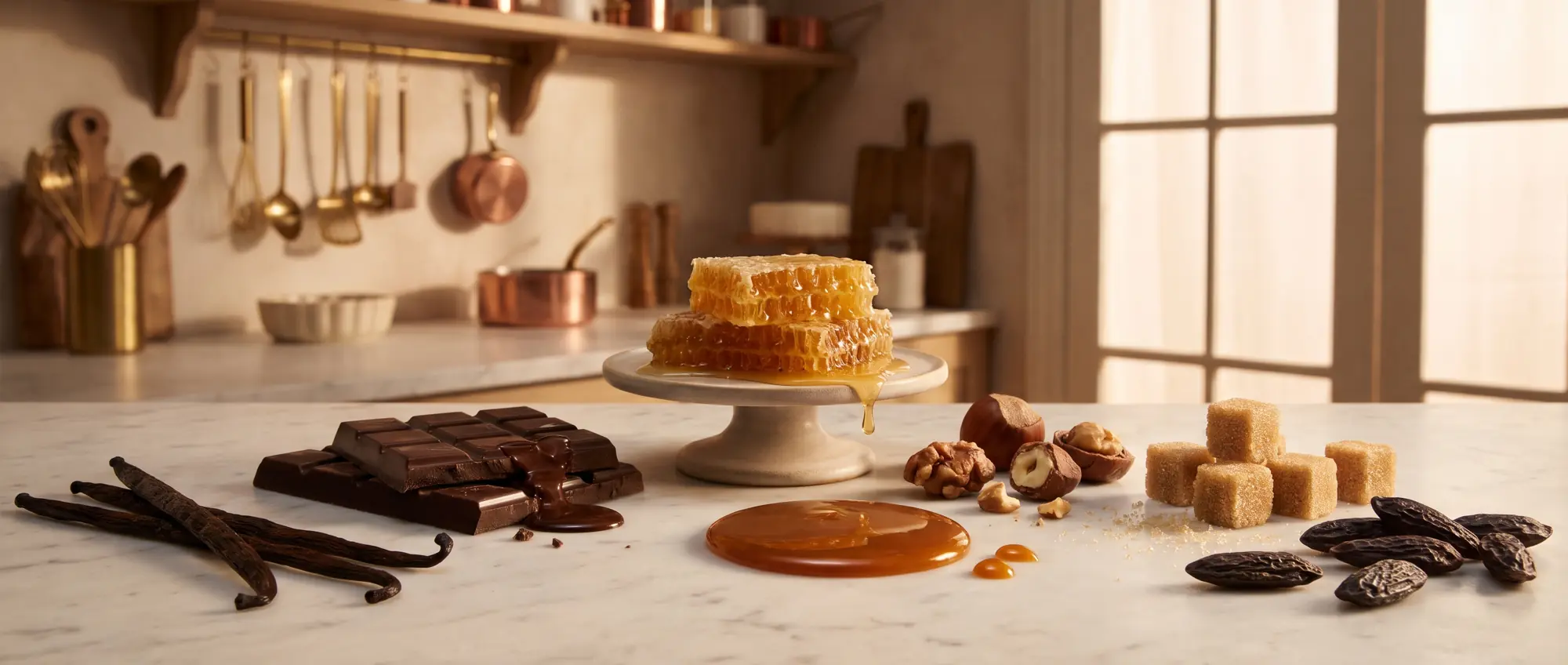
Honey in perfumery is mostly a built accord. It is usually made from synthetic molecules such as phenylacetic acid and its esters, often with beeswax absolute. A true honey absolute, extracted with solvent from honey, exists but is rare.
Where it comes from
Natural honey absolute comes from bees' honey and is costly and variable, so it is seldom used. Most honey notes are made in the lab by fragrance houses from aroma chemicals, with beeswax absolute from the honeycomb added for the natural side.
What it smells like
Sweet and golden, like runny honey on a spoon. At the edges it can turn waxy, slightly floral and a little animalic or smoky, especially when beeswax is involved. Too strong a dose of the key chemical tips toward sour and musty, so it is used with care.
In perfumery
Perfumers place it mostly in the heart, with a good share in the base and some in the top. It adds warm sweetness and a waxy, lived-in texture to florals and to oriental, vanilla-led blends. It is often paired with vanilla, musk, patchouli, amber, jasmine, sandalwood, bergamot and rose.
Scent profile
Our read of the note, not a measurement.
Where it sits
Mostly a heart and base note.