
Himalayan Cedar
Also known as Deodar cedarwood oil, Deodar cedar, Cedrus deodara
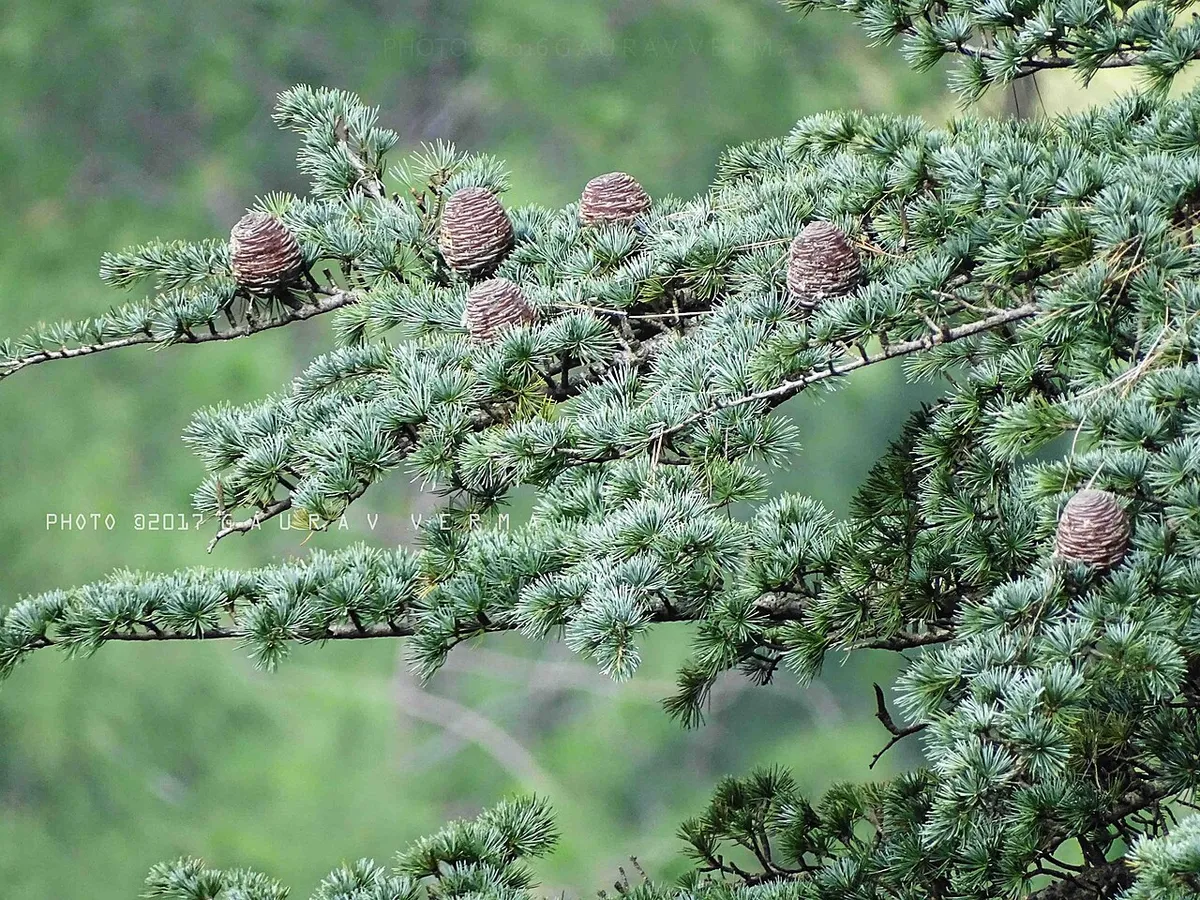
Part of CedarPhotos: Gv3101992, CC BY-SA 4.0; Paul Evans from London, United Kingdom, CC BY 2.0
About Himalayan Cedar
What it is
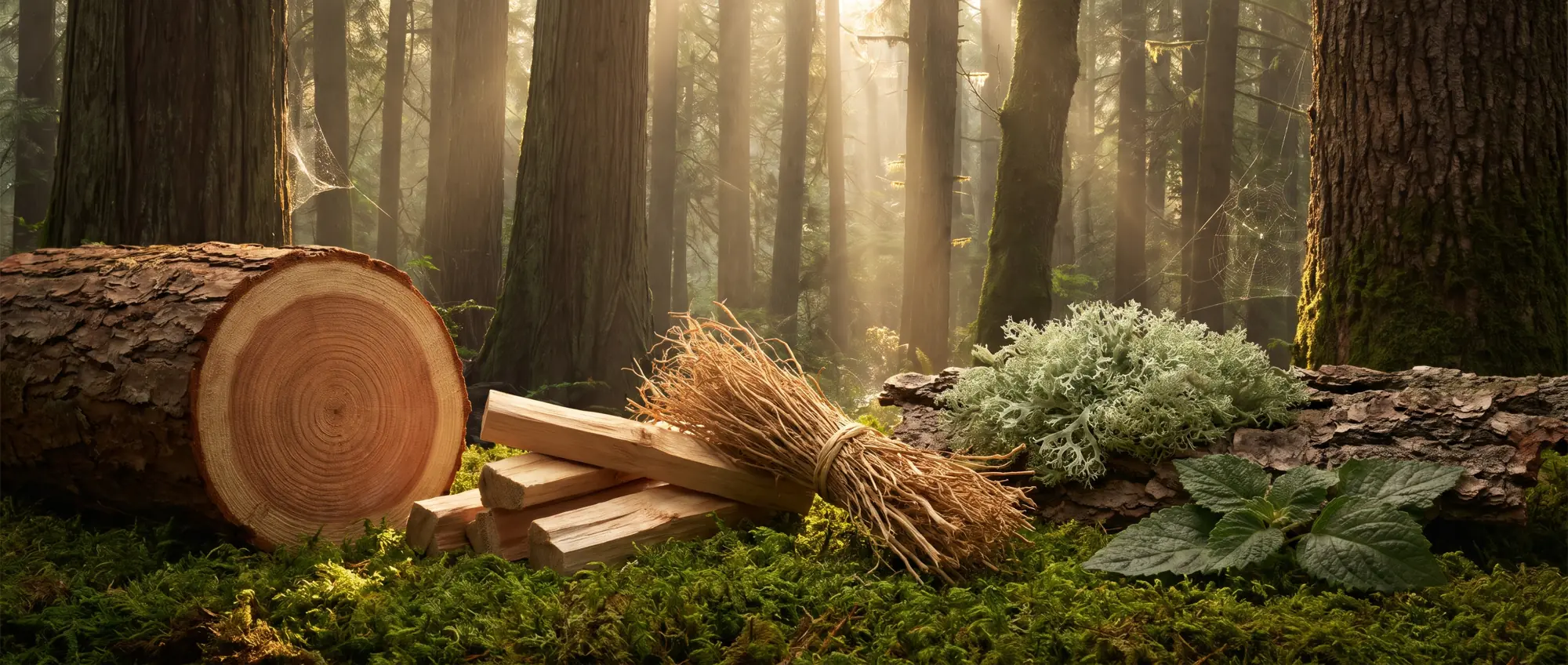
An essential oil, steam distilled from the inner wood of Cedrus deodara, a true cedar in the pine family. The crude oil is often yellowish or darker.
Where it comes from
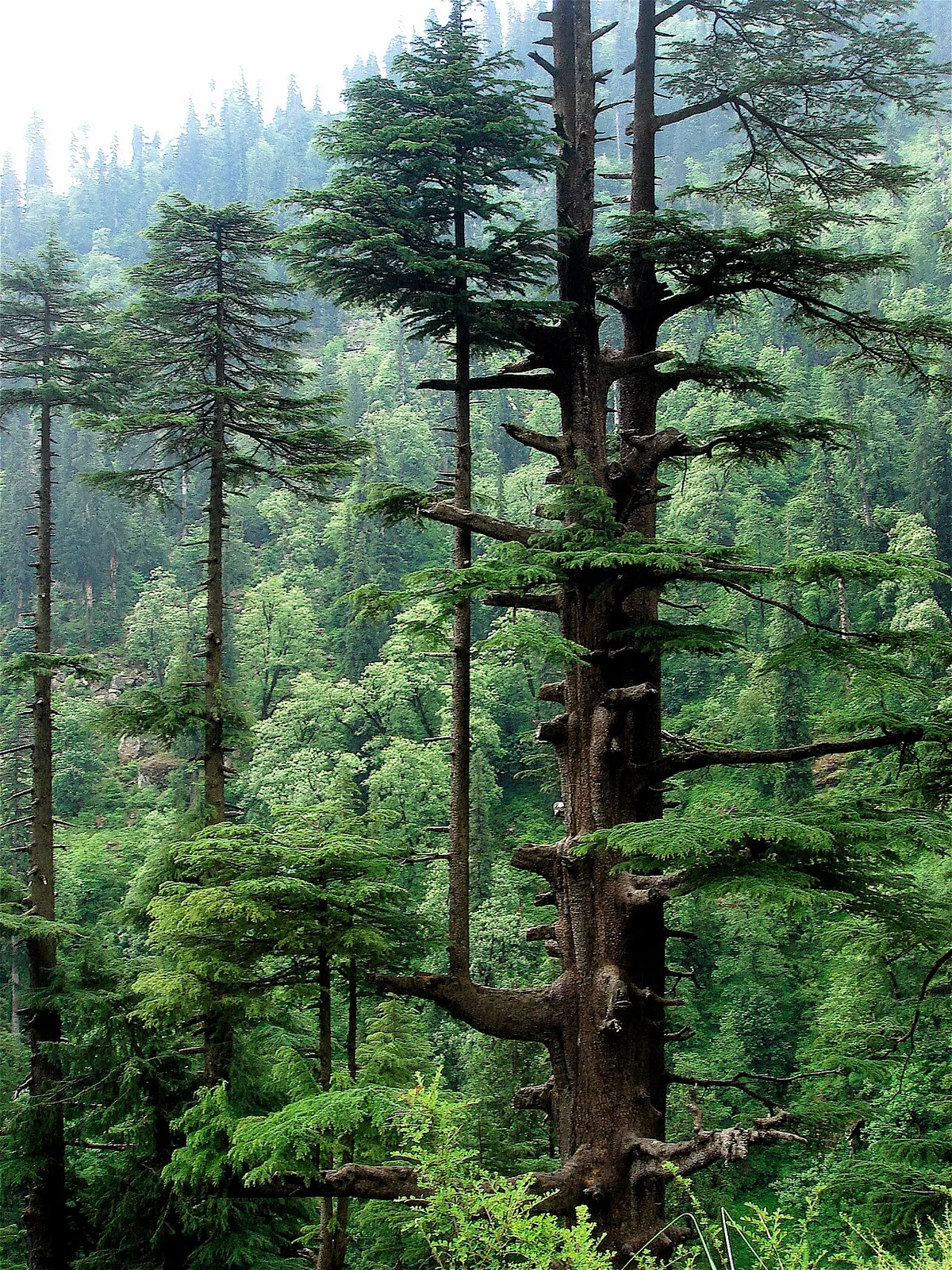
The tree grows at high altitude across the Himalayan range, from Afghanistan and Pakistan through northern India, Nepal and Tibet. Small-scale distillers in Himachal Pradesh in India are a main source of the oil.
What it smells like
The first impression is woody and dry, with a sharp, almost pencil-shaving freshness. After a few hours it turns sweeter, and over several days it settles into a spicy, resinous warmth. It is harder and drier than Atlas cedarwood, which is creamier.
In perfumery
It gives woody, dry depth to a composition and holds for a long time on the skin. Perfumers often pair it with sandalwood, amber, musk, patchouli and oakmoss for a woody base, and with jasmine or Bulgarian rose in heady floral work. It also suits leather accords.
Scent profile
Our read of the note, not a measurement.
Where it sits
Mostly a heart and base note.