
Carob Tree
Also known as Ceratonia siliqua, locust bean extract, carob bean absolute
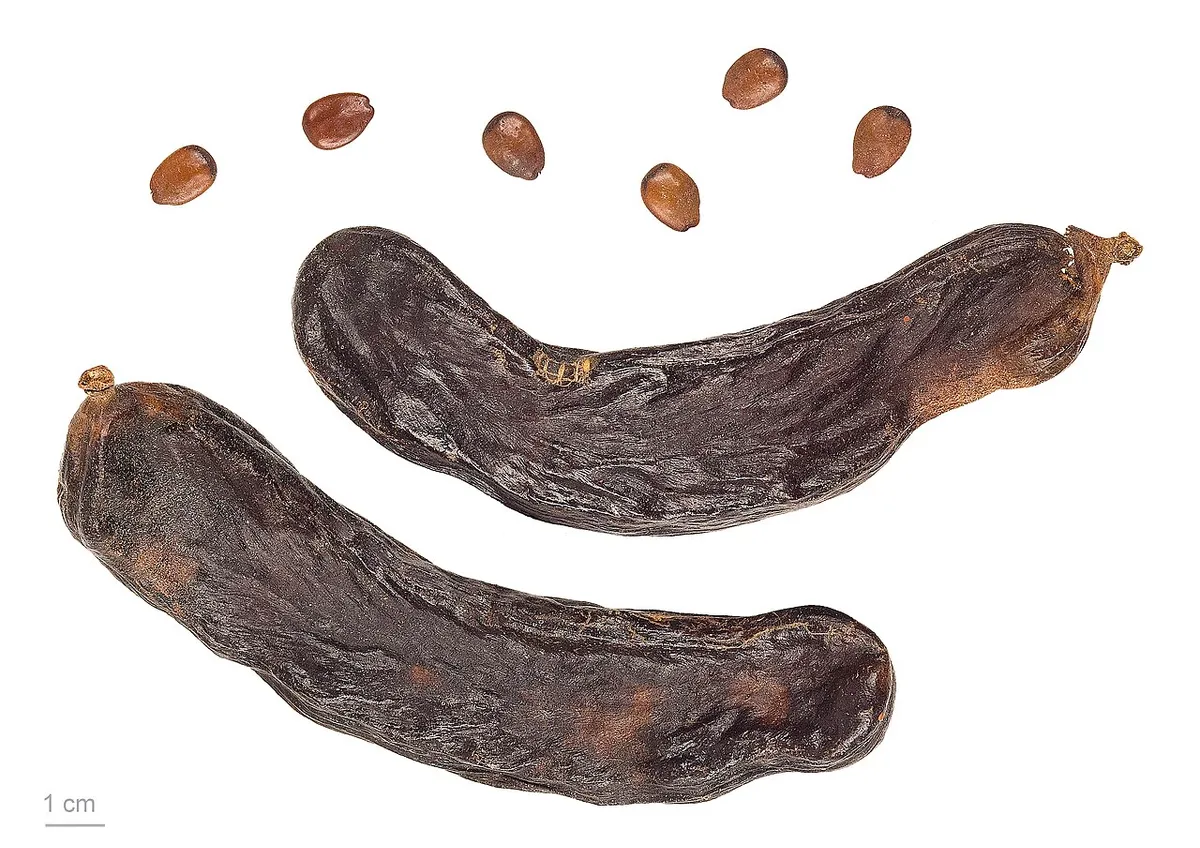
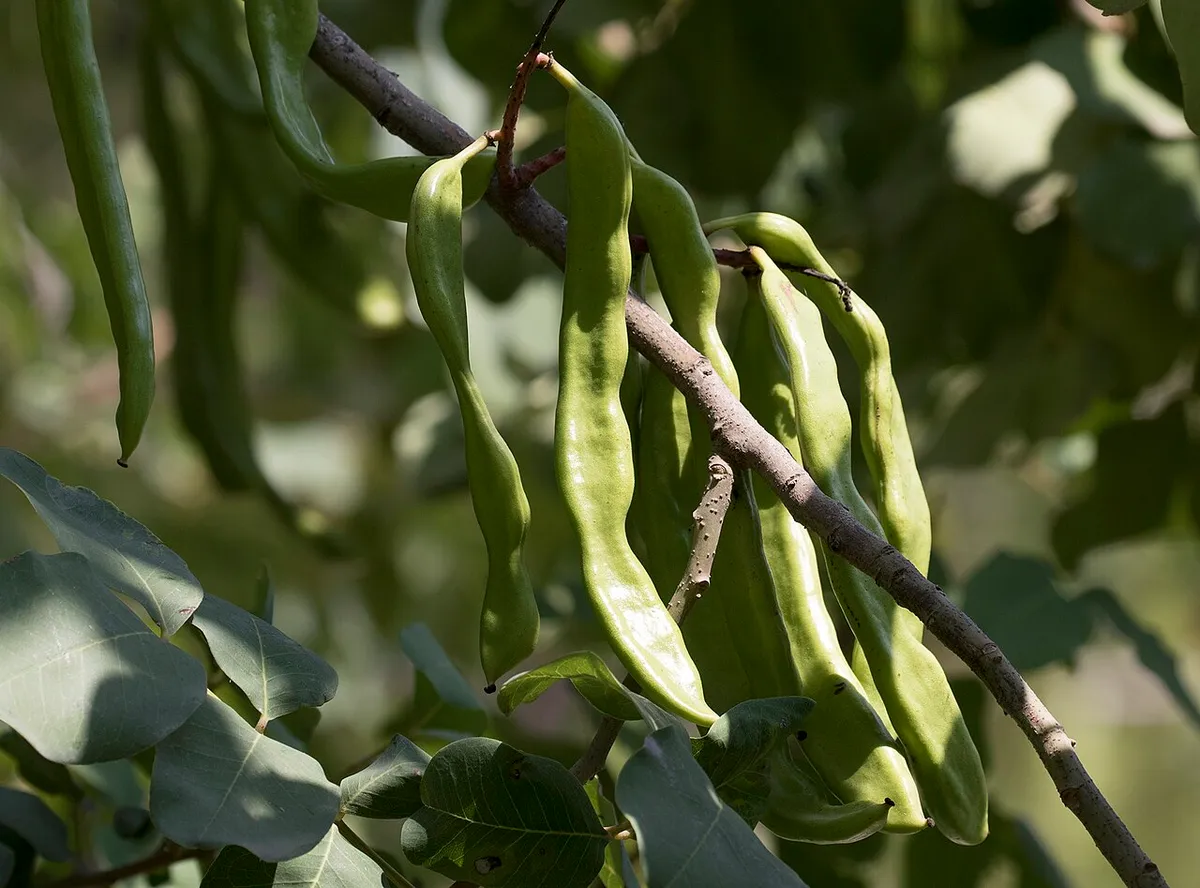
Photos: Roger Culos, CC BY-SA 3.0; Zeynel Cebeci, CC BY-SA 4.0
About Carob Tree
What it is
A dark brown, semi-solid oleoresin made from the sweet pulp of the carob pod, the fruit of the Ceratonia siliqua tree. The seeds are removed first and the pulp is extracted.
Where it comes from
The carob tree is a Mediterranean and Middle Eastern evergreen legume. The oleoresin sold for perfumery is made from pods grown in Morocco, where Biolandes cultivates its own orchard.
What it smells like
When first applied, carob smells chocolaty, with caramel and sugar nuances. As it develops it turns sweet and sour, and later takes on cheesy, acidic and buttery tones.
In perfumery
Perfumers use carob for its cocoa-like sweetness, which adds a chocolate effect without a heavy gourmand base. It blends well into oriental accords and is often paired with vanilla, patchouli, amber, caramel, clove, jasmine, labdanum and tobacco.
Scent profile
Our read of the note, not a measurement.
Where it sits
Mostly a heart and base note.