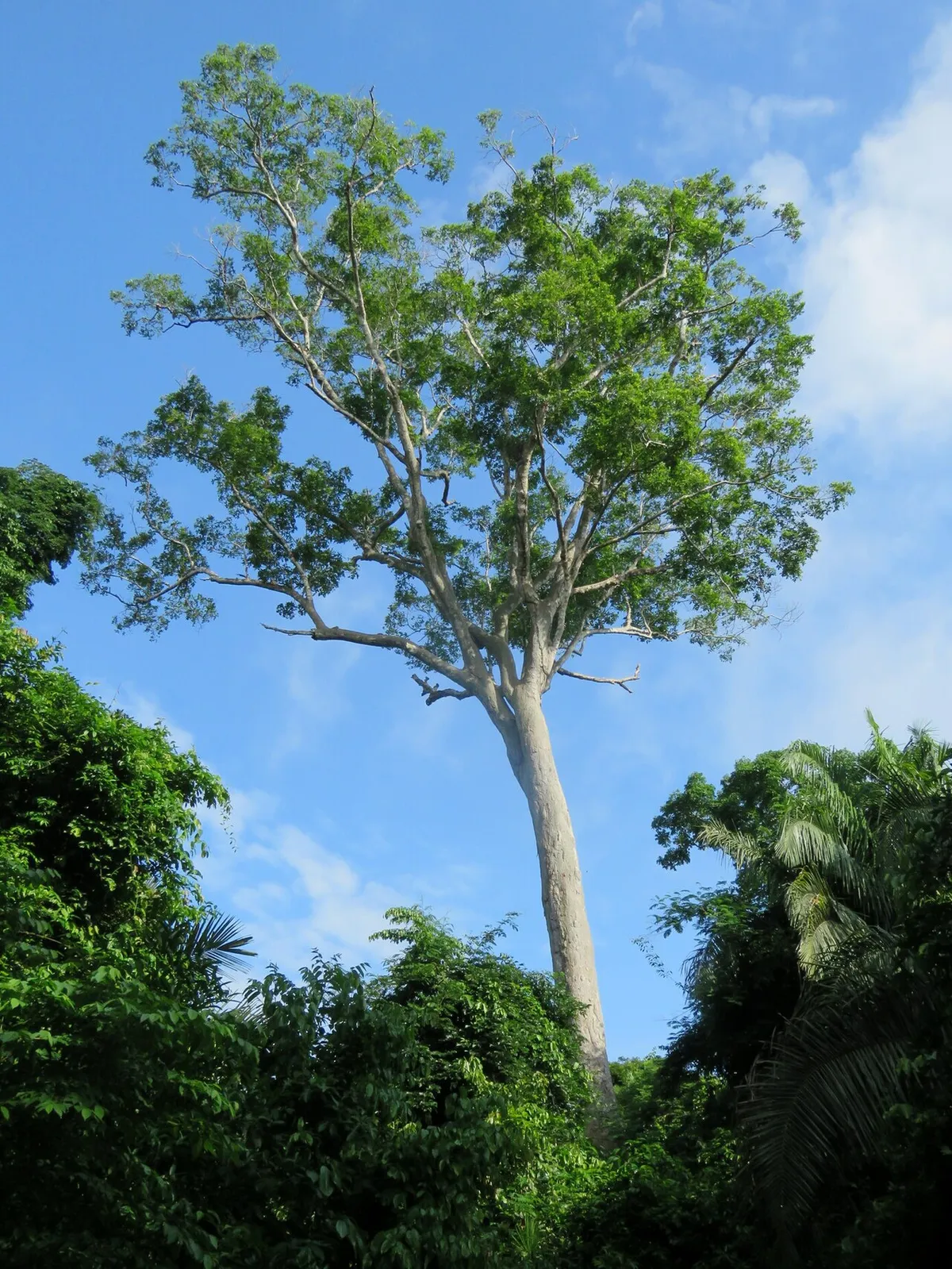

Tonka
Also known as Coumarou, Dipteryx odorata, Cayenne guaiac, Sarrapia
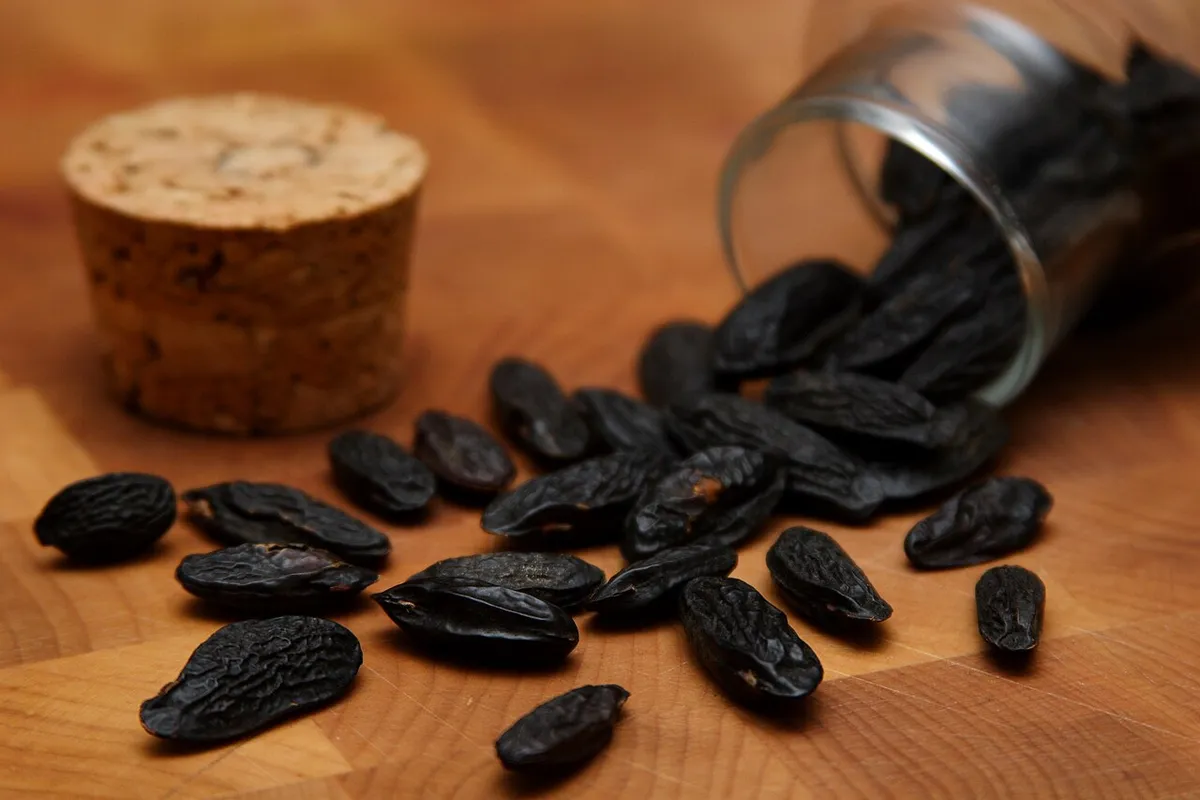
Photos: Mecredis / Fred Benenson, CC BY-SA 3.0; vincentvosriberalta, CC BY 4.0
About Tonka
What it is
The seed of the coumarou tree (Dipteryx odorata), used whole or turned into an absolute or resinoid by solvent extraction. Coumarin is the molecule behind most of its smell.
Where it comes from
The tree grows along Amazonian riverbanks in South America, mainly Venezuela, Guyana and Brazil. Fallen fruits are dried for about a year before the seeds are cracked out.
What it smells like
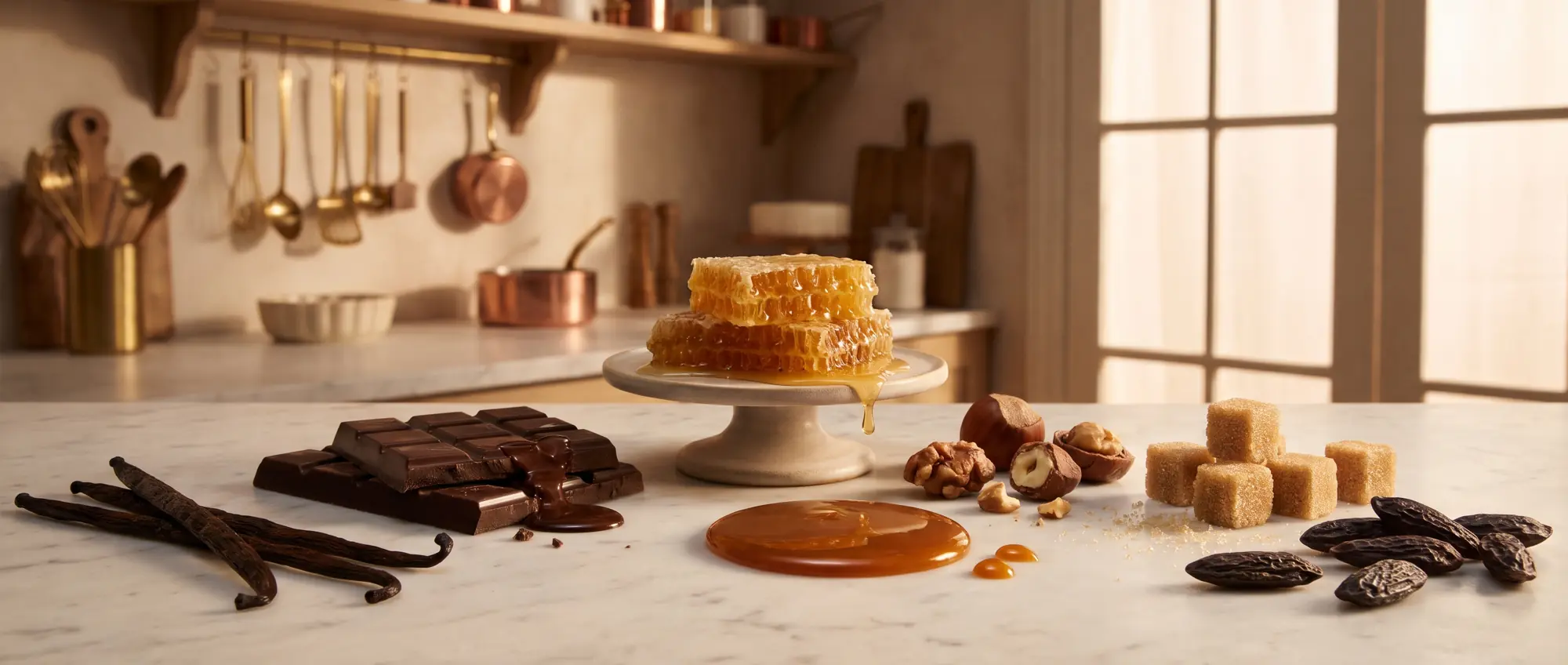
Warm and sweet, like almond, caramel and vanilla, with a hint of clove. Under that sit hay, tobacco and a touch of pistachio. It is drier and more hay-like than vanilla.
In perfumery
A base note, with some use in the heart. It adds a dry, sweet warmth and lasting power, and it gives a natural effect in fougère and amber accords. It is often paired with vanilla, musk, sandalwood, patchouli and amber.
Scent profile
Our read of the note, not a measurement.
Where it sits
Mostly a base note.
Kinds of Tonka
Deep, warm and sweet, with caramel, almond and vanilla and a hint of clove. Rounder than coumarin alone.
Tonka Bean page