

About White Honey
What it is
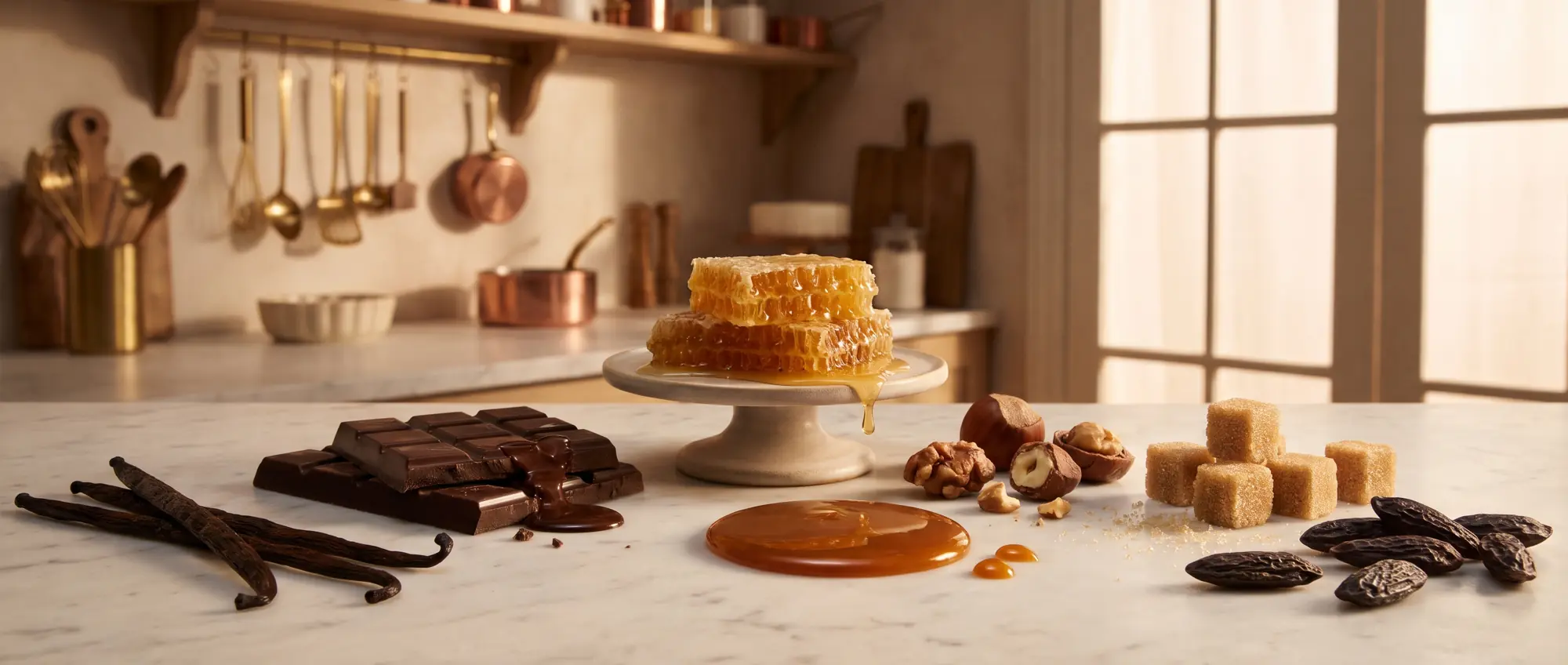
A honey accord, mostly built from aroma chemicals, that suggests honey made from the nectar of pale flowers. Natural honey absolutes exist but are costly and vary from harvest to harvest.
Where it comes from
It is modeled on honey from white-flowering plants such as acacia and orange blossom. Greece, France and the United States are named as honey-producing countries, but most perfumery versions are made in the lab rather than taken from a hive.
What it smells like
Creamy, soft sweetness that is lighter and less syrupy than table honey. It opens a little fruity and citrusy, moves into creamy floral tones, then dries to a powdery, slightly woody sweetness with a faint waxy, pollen-like edge.
In perfumery
Perfumers use it to add a smooth, floral sweetness that carries from the heart into the base without the weight of dark honey. It is often paired with jasmine, rose, musk, amber, vanilla and sandalwood, and its sweetness is strong enough that a little goes a long way.
Scent profile
Our read of the note, not a measurement.
Where it sits
Mostly a heart and base note.