

About White Cedar Extract
What it is
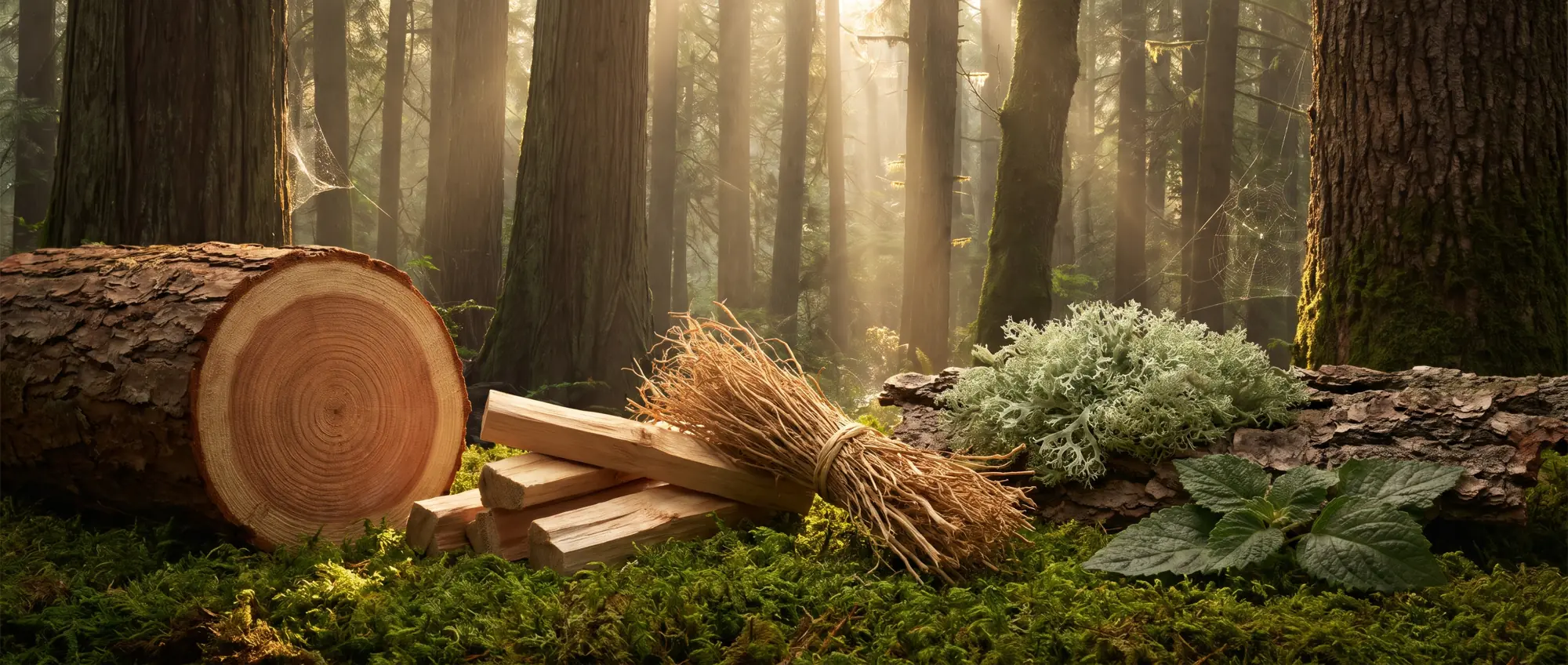
A natural extract made from the wood of white cedar trees, mainly of the genus Thuja. It is taken from wood chips or shavings by solvent or CO2 extraction.
Where it comes from
One supplier guide names Canada and the northeastern United States as the main sources, with France and Japan also listed. Yields are low.
What it smells like
Soft, dry wood that is creamy and slightly powdery. It has fresh, aromatic touches and a faint resinous note underneath.
In perfumery
Perfumers place it mostly in the base, with some use in the heart. It adds a soft, clean woody depth to citrus and floral blends. It is often paired with musk, bergamot, amber and sandalwood.
Scent profile
Our read of the note, not a measurement.
Where it sits
Mostly a base note.