
Tulsi
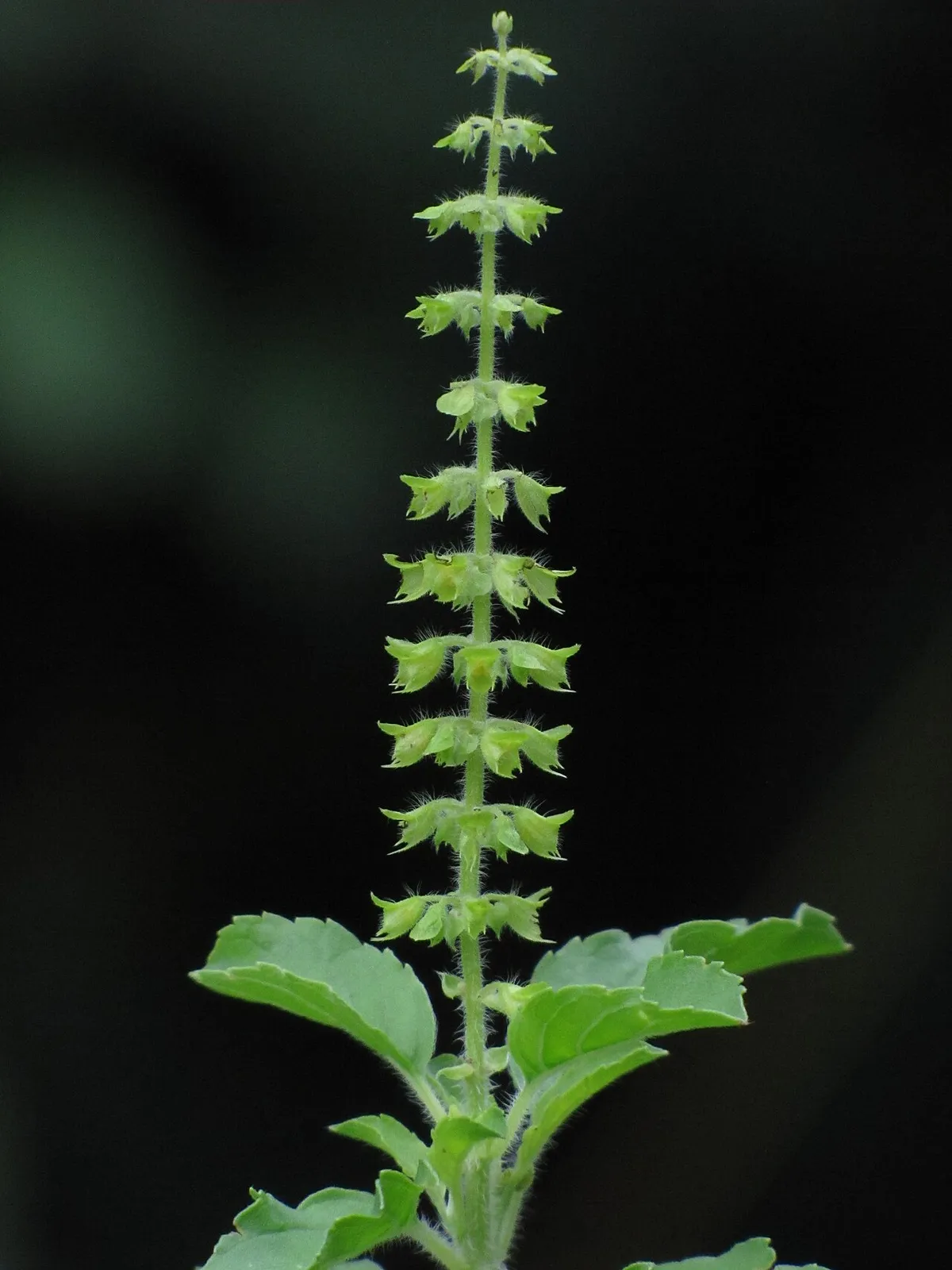
Also known as Ocimum tenuiflorum, Ocimum sanctum, holy basil, tulasi
Photos: Vaikoovery, CC BY 3.0
About Tulsi
What it is
Tulsi is an essential oil distilled from the aerial parts of holy basil, Ocimum tenuiflorum, a plant in the mint family. The plant is grown mainly for this oil.
Where it comes from
The plant is thought to have begun in north central India. It is native to tropical and subtropical parts of Asia, Australia and the western Pacific, and it is widely grown in the Southeast Asian tropics.
What it smells like
The oil opens with a clove-like spice, which comes from its high eugenol content. It then turns sweeter and warmer, and settles into a somewhat bitter, herbaceous green note with a faint woody edge.
In perfumery
Perfumers use tulsi for its clove-like spice and green bite, which lift the opening of a composition. It often carries into the heart. It is commonly paired with cardamom, lavender, lemon, orange blossom, patchouli, cypress, olibanum and rosemary.
Scent profile
Our read of the note, not a measurement.
Where it sits
Mostly a top and heart note.