

About Spanish Jasmine
What it is
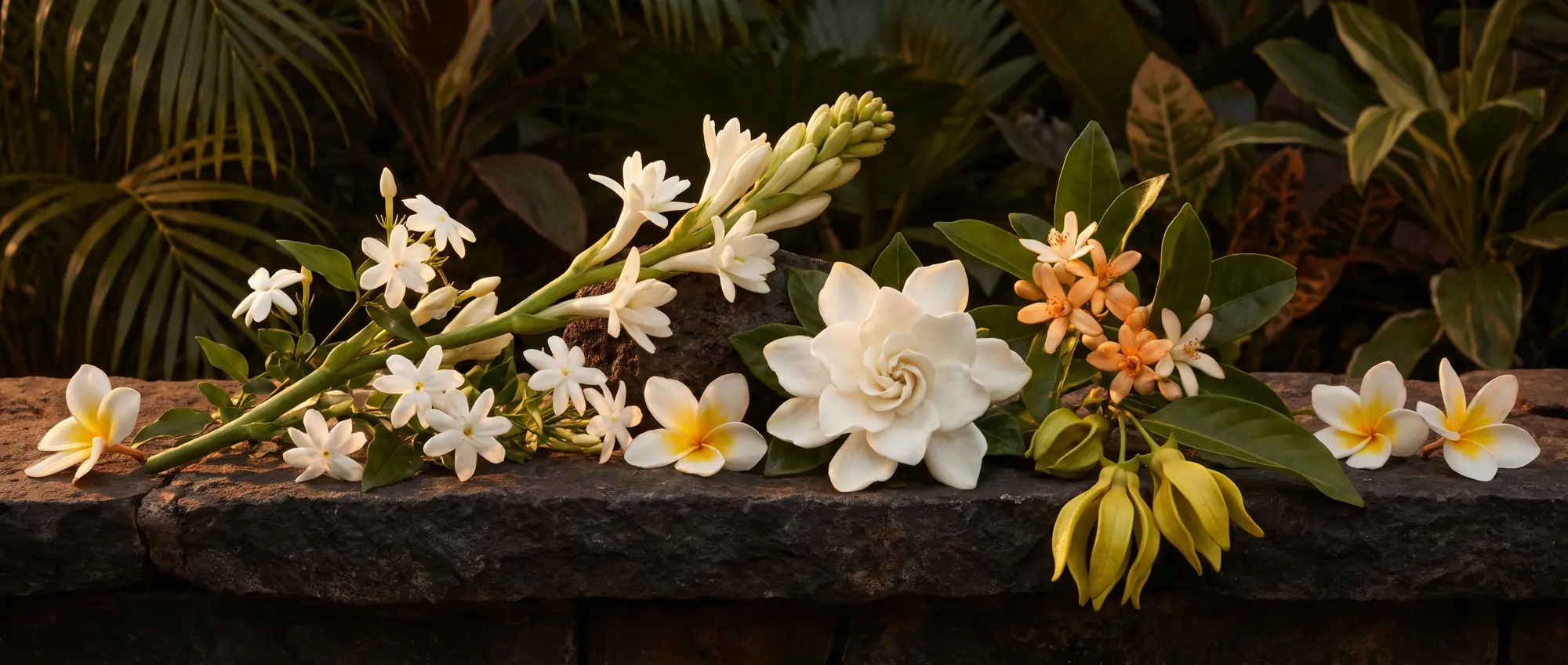
Spanish jasmine is the absolute of Jasminum grandiflorum, a solvent-extracted concentrate made from the flowers. Steam distillation is not used because the flowers are too fragile, so no true essential oil is made from them.
Where it comes from
The plant is native to South Asia and reached the Mediterranean along Arab trade routes. Commercial absolutes come from growing areas in Egypt, India (notably Tamil Nadu) and Grasse in France. The name Spanish jasmine is a common name and does not point to Spain as a source.
What it smells like
It opens lush, green and clearly floral, with apricot and strawberry facets. As it warms and settles, it turns animalic and indolic, with a skin-like depth. It reads richer and fruitier than jasmine sambac, close to almond milk and liqueur.
In perfumery
Perfumers use it alone to show the whole range of the flower, or in very small amounts to add warmth and richness without it reading as jasmine. Its benzyl acetate gives white floral accords lift and structure. It is often paired with musk, sandalwood, amber and bergamot.
Scent profile
Our read of the note, not a measurement.
Where it sits
Mostly a heart note.