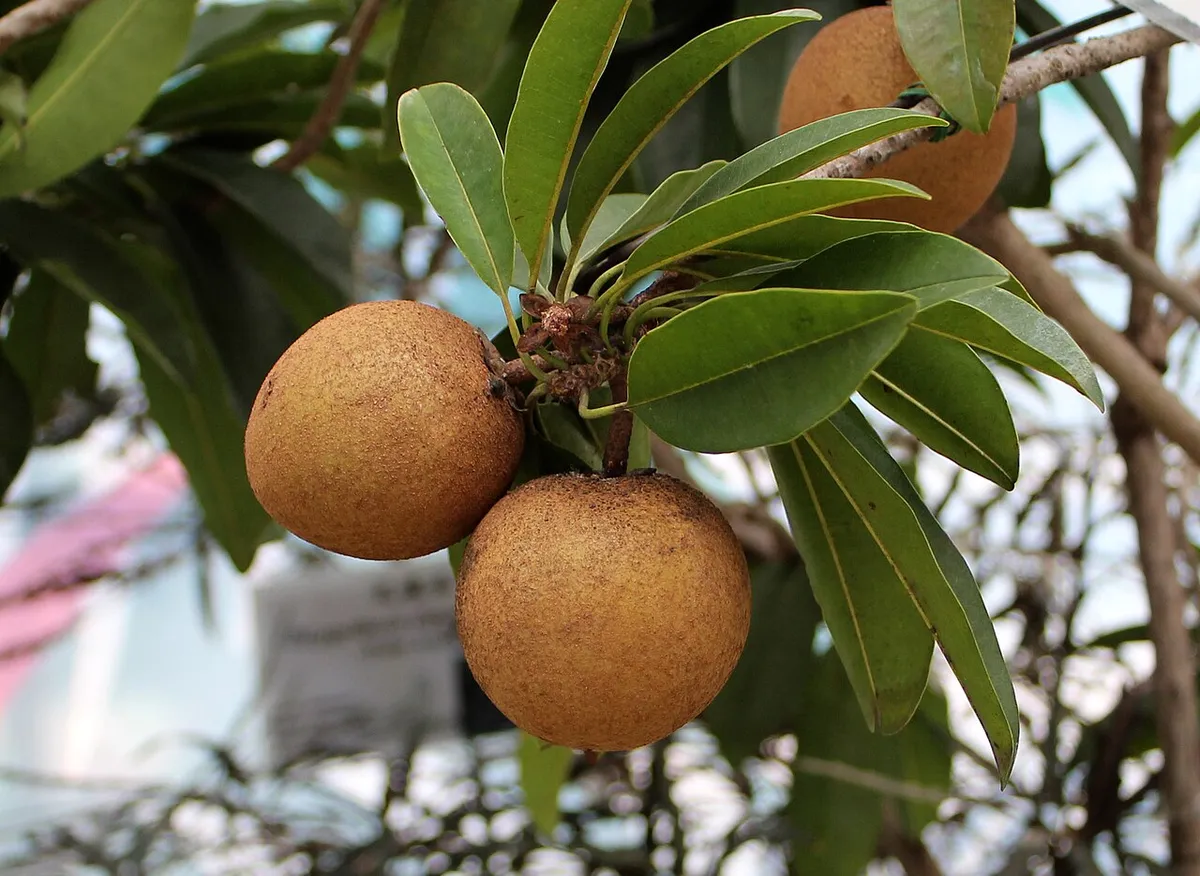
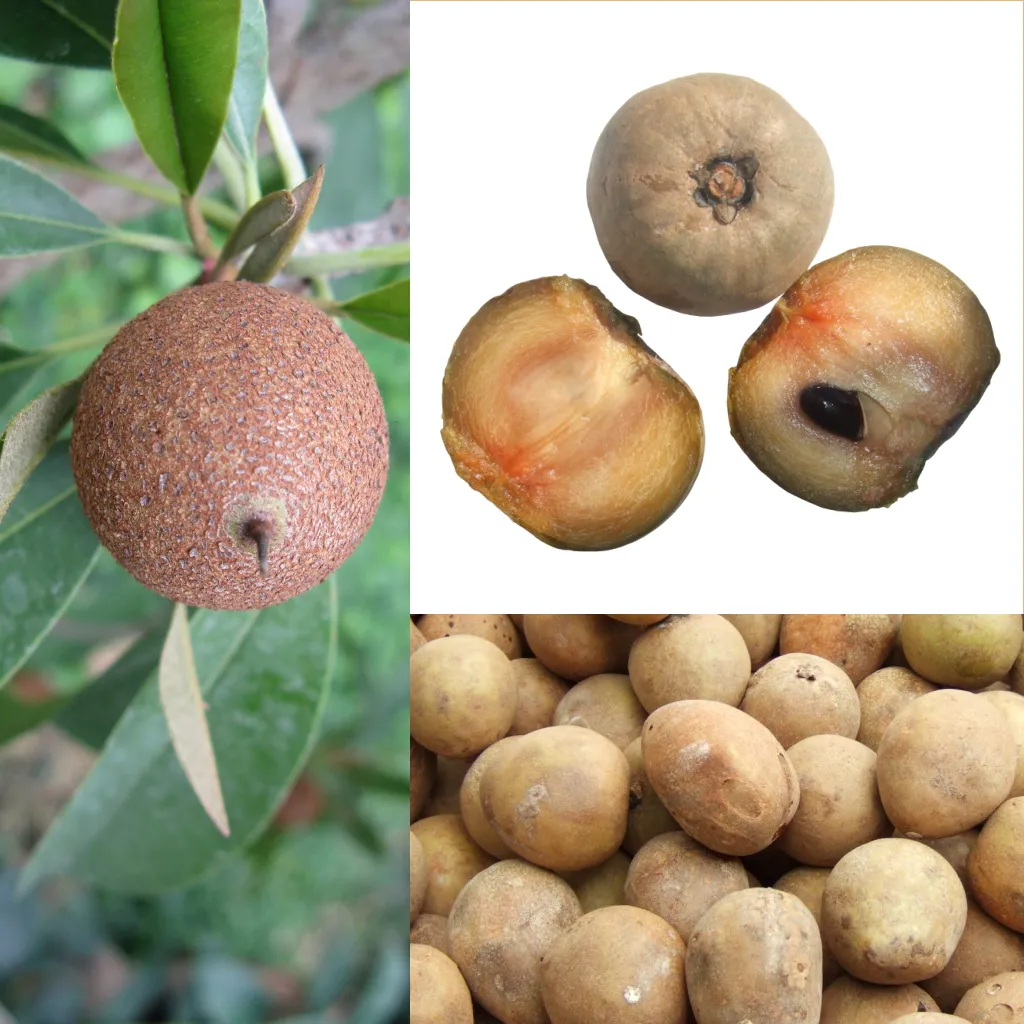

Sapodilla
Also known as Manilkara zapota, chikoo, sawo, sofeda, zopota
Photos: HK Arun, CC BY-SA 3.0; Agnieszka Kwiecień, Nova, CC BY-SA 3.0
About Sapodilla
What it is
Sapodilla in perfumery is usually an accord built from synthetic materials and natural isolates, not a single extract. The fruit of the sapodilla tree yields very little aromatic material by direct extraction, so perfumers recreate its caramel and pear character instead.
Where it comes from
The sapodilla tree (Manilkara zapota) is native to southern Mexico, Central America and the Caribbean. The fruit is grown across the tropics and is eaten fresh, but the note itself is a perfumery reconstruction of its smell.
What it smells like
Sapodilla opens sweet and fruity, like ripe pear with brown sugar and a light touch of cinnamon, close to a warm spiced pear crumble. It settles into a creamy, caramel-like sweetness that stays on the skin for a long time.
In perfumery
Perfumers use sapodilla to add a sugary, caramelised fruit warmth at the start of a composition. Its sweetness is strong, so it is blended in with woods and musks to soften them. It is often paired with sandalwood, magnolia, violet, ambergris, ambrette, musk, amber and cedar.
Scent profile
Our read of the note, not a measurement.
Where it sits
Mostly a top note.