
About Praline
What it is
A accord built in the lab from aroma chemicals, since no natural praline extract exists. It copies the smell of nuts, usually almonds or hazelnuts, cooked in caramelized sugar.
Where it comes from
The confection comes from France, where pralines began as almonds coated in boiled sugar. As a perfume note it dates from the early 1990s, when it spread after a famous 1992 launch that paired a large dose of ethyl maltol with patchouli.
What it smells like
Very sweet and caramelic at first, like toasted sugar, with a nutty, hazelnut-like core. It then turns creamy and milky, close to vanilla, and dries down soft and balsamic.
In perfumery
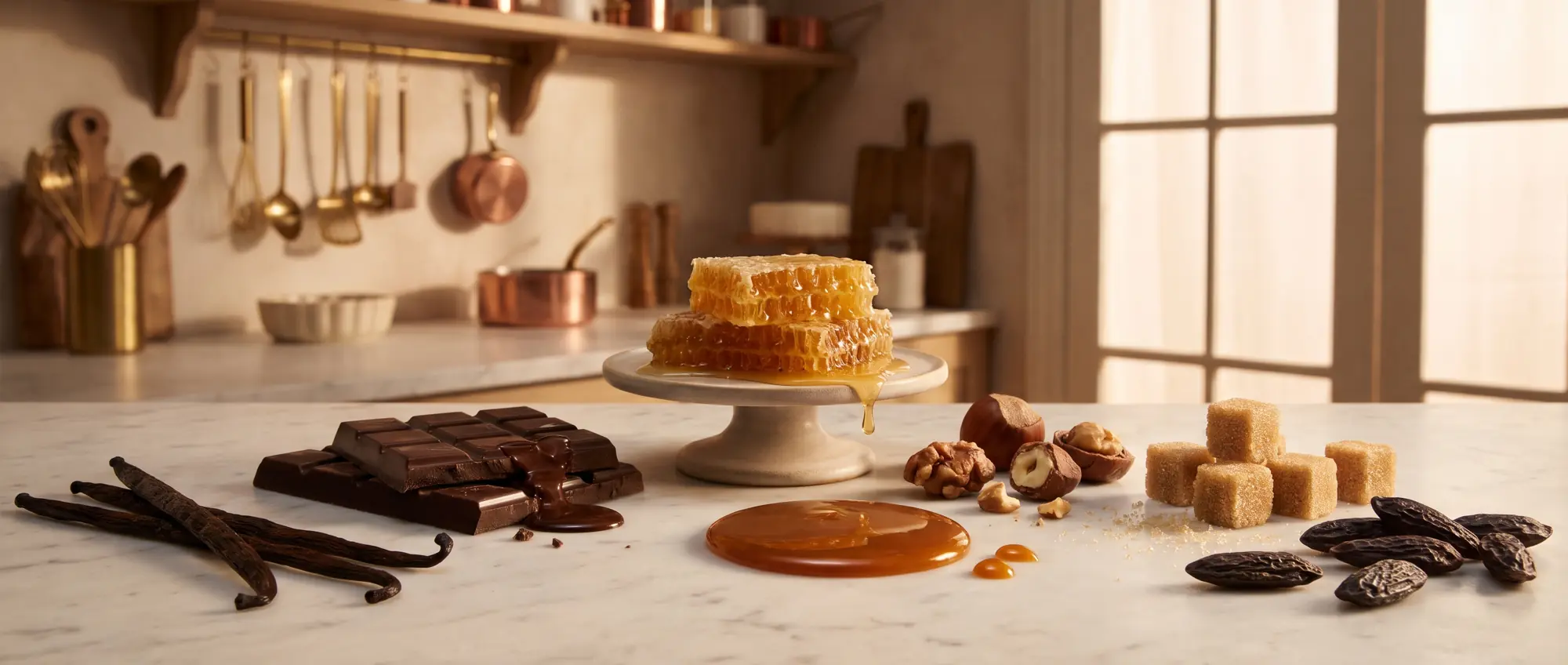
Mostly a base and heart note, with only a small share in the top. Perfumers build it from ethyl maltol, lactones and vanillin, usually at under 1% because it is strong. It adds sweetness and warmth, and it sits well with vanilla, patchouli, tonka bean, amber and musk. Bergamot is used to cut the sweetness.
Scent profile
Our read of the note, not a measurement.
Where it sits
Mostly a base note.