

Pandan
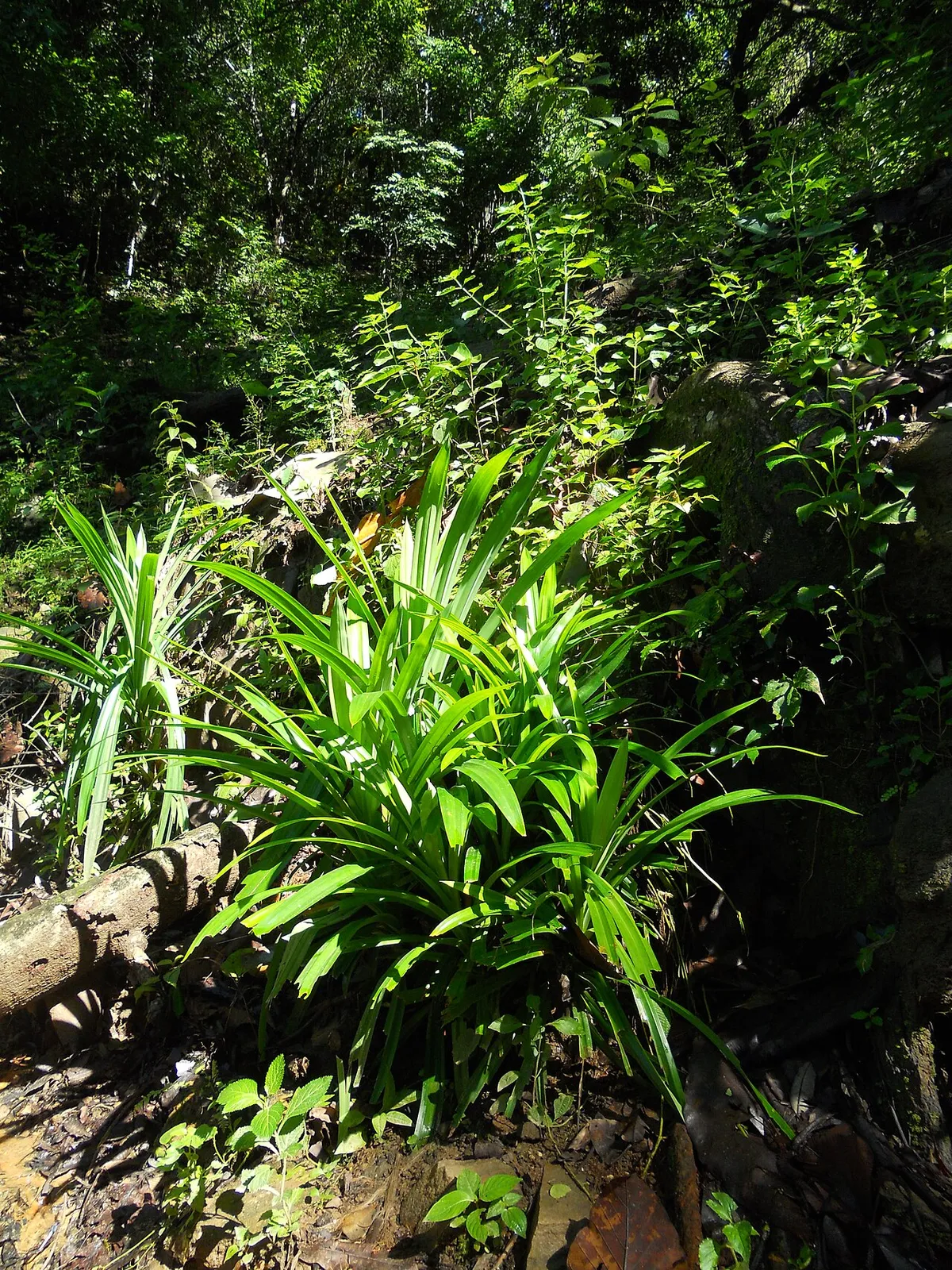
Also known as Pandanus amaryllifolius, pandan leaf
About Pandan
What it is
An extract made from the fragrant leaves of the pandan plant, Pandanus amaryllifolius, usually by solvent or supercritical CO2 extraction. Its character comes mostly from one compound, 2-acetyl-1-pyrroline, which builds up once the leaves are withered, cooked or pounded.
Where it comes from
The plant is grown widely across Southeast Asia and South Asia. It was first described from specimens in the Maluku Islands, but no wild populations have been found, so its exact origin is uncertain.
What it smells like
At first it smells popcorn-like and pandan-like, then turns nutty after a few hours and botanical after a few days. Grassy and vanilla-like undertones run through it, close to the smell of cooked jasmine rice and fresh bread.
In perfumery
Perfumers use pandan leaf to modify and blend a formula, and to lift the notes around it. Its essence is sometimes used in place of vanilla. It pairs well with tonka bean, amber and coconut milk.
Scent profile
Our read of the note, not a measurement.