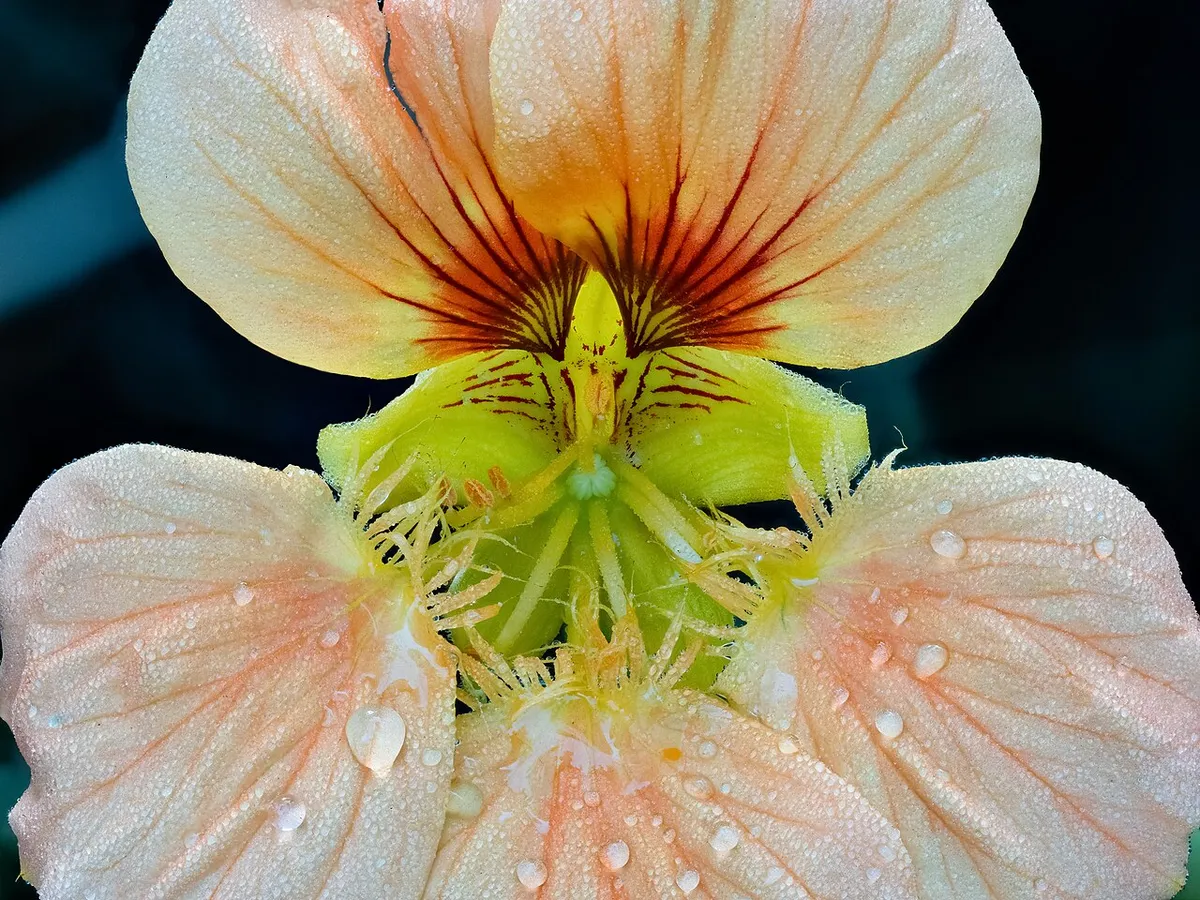

Nasturtium
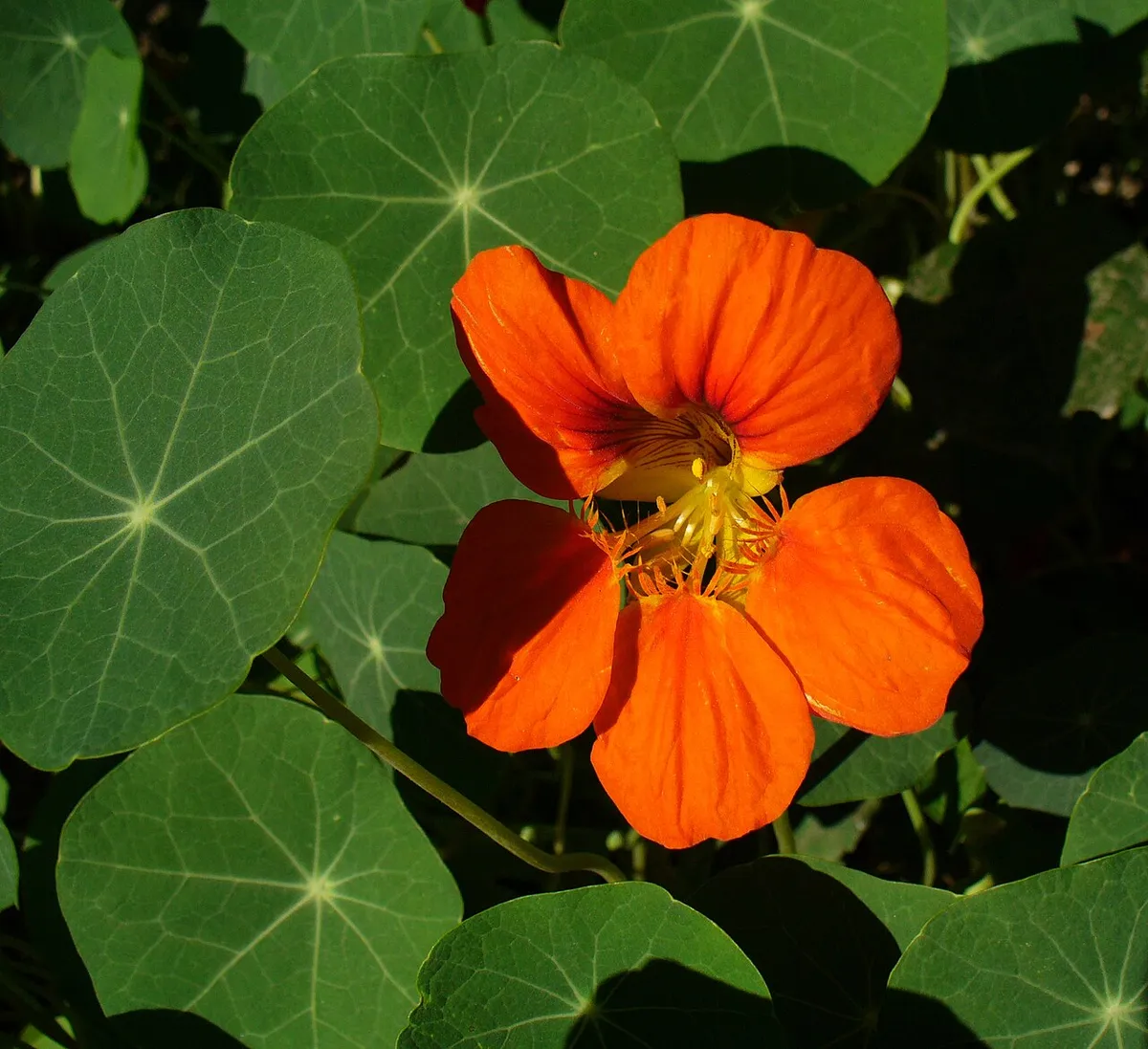
Also known as Indian cress, garden nasturtium, monk's cress, Tropaeolum majus
Photos: George Chernilevsky, Public domain; Ermell, CC BY-SA 4.0
About Nasturtium
What it is
A natural extract made from the garden nasturtium plant, Tropaeolum majus. Its odour comes mainly from benzyl isothiocyanate, the sharp compound that gives mustard and wasabi their heat.
Where it comes from
The plant comes from the Andes, from Bolivia north to Colombia. Bolivia, Colombia, Ecuador and Peru are listed as producing countries, with Brazil as another source.
What it smells like
It opens peppery and spicy, with a clean green edge and a watery, radish-like freshness under the pepper. Over a few hours it turns rougher and more bitter, and after a few days a faint smoky sweetness remains.
In perfumery
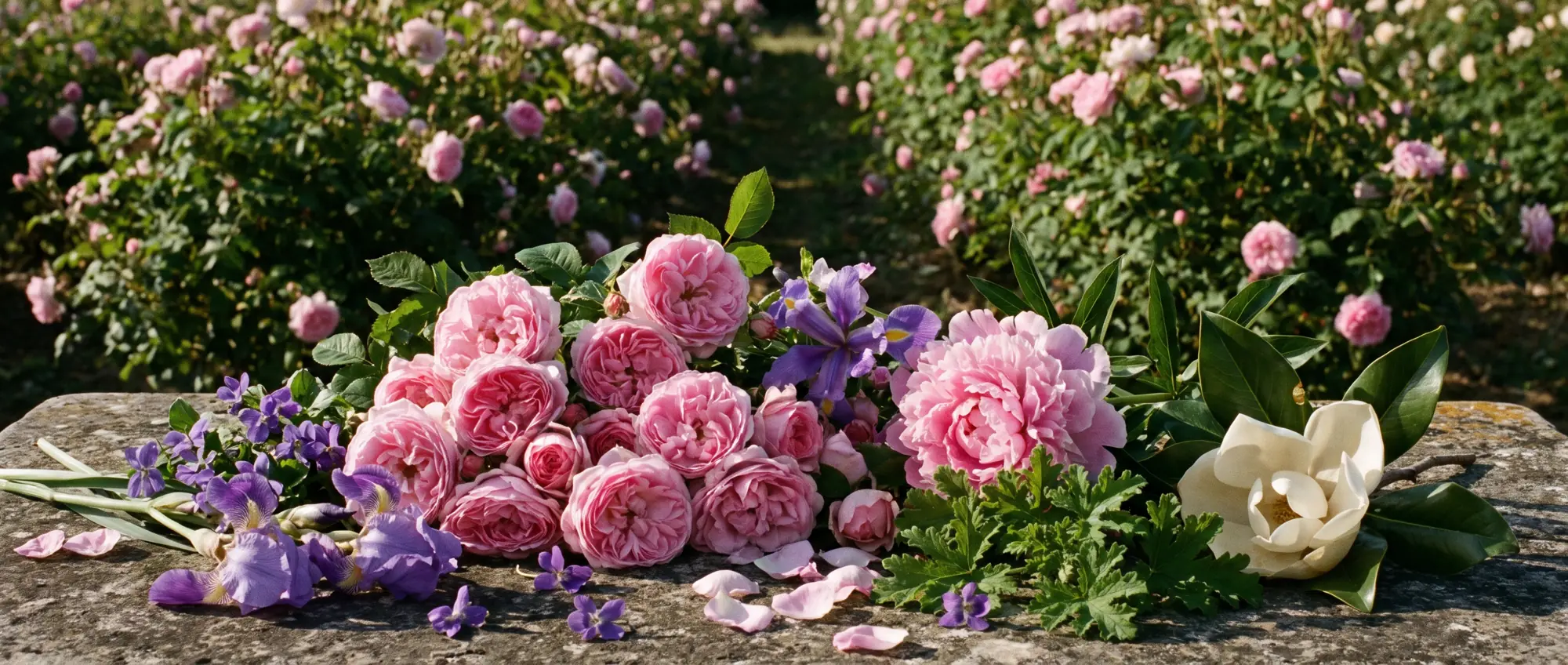
Perfumers use nasturtium to add a sharp, green pepperiness to a floral heart, lifting it without much sweetness. It is often paired with rose, jasmine and tuberose, and with fresh notes such as bergamot or wasabi-like greens.
Scent profile
Our read of the note, not a measurement.
Where it sits
Mostly a top and heart note.