

About Marron Glace
What it is
A synthetic accord built in the lab. It is not distilled or extracted from the nut. Perfumers combine aroma chemicals to copy chestnuts cooked in sugar syrup.
Where it comes from
The name comes from the French candied-chestnut confection, marron glacé. The accord is modelled on Castanea sativa, the sweet chestnut, and it has been used by perfumers such as Bertrand Duchaufour.
What it smells like
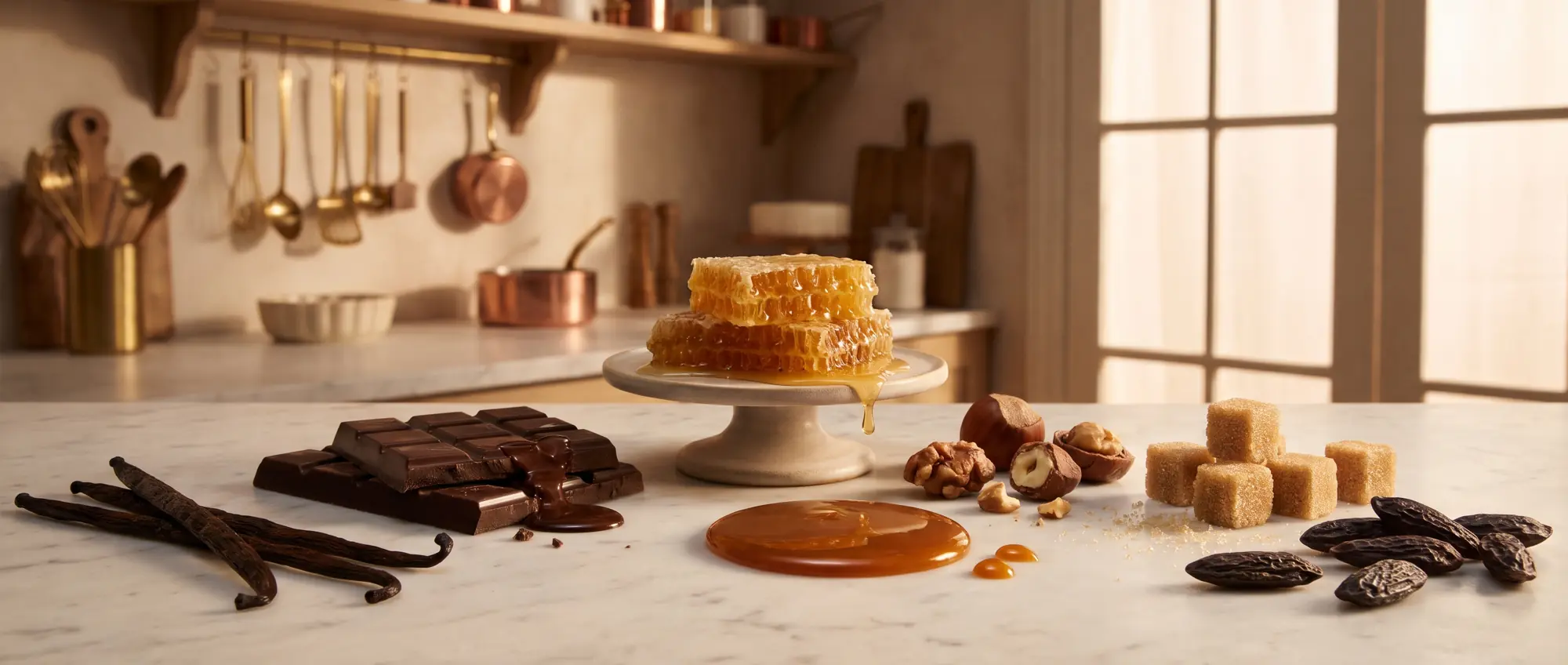
It opens sweet and sugary, like chestnuts glazed in syrup. Roasted and nutty notes come next, with caramel underneath. Over time it softens into a creamy, vanilla-like warmth.
In perfumery
Perfumers use it to add a round, edible sweetness with a roasted nut edge. It is often paired with vanilla, tonka, praline, benzoin and amber. In floral and oriental compositions it can give jasmine and woods a warm, sugared base.
Scent profile
Our read of the note, not a measurement.
Where it sits
Mostly a base note.