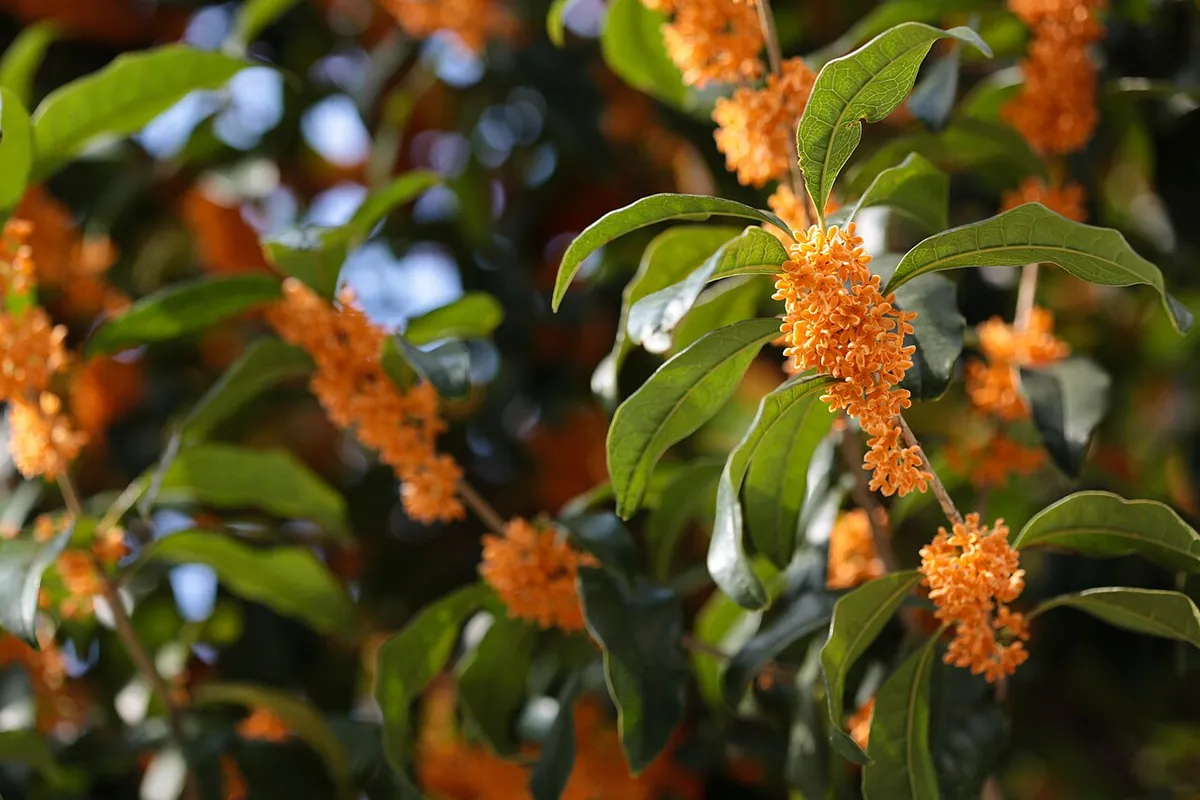
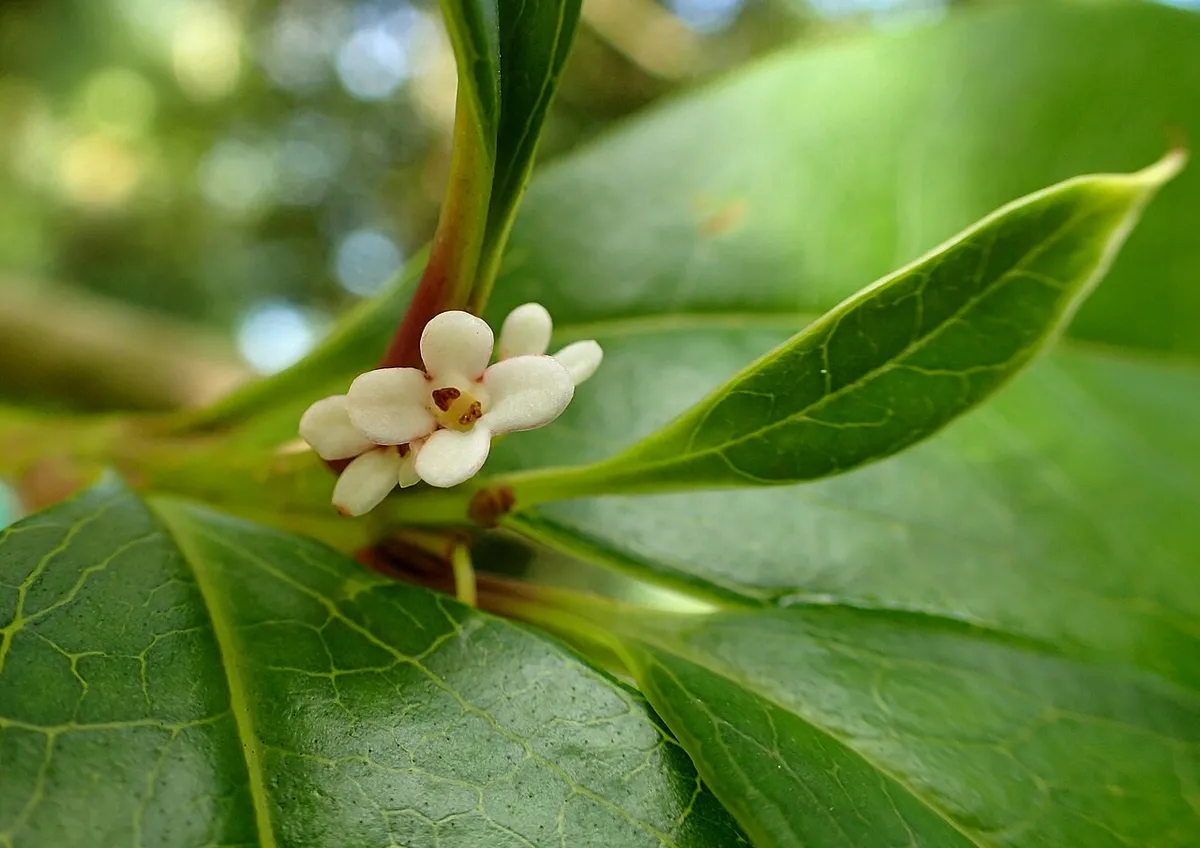

Chinese Osmanthus
Also known as Osmanthus fragrans, Sweet osmanthus, Tea olive, Guihua, Kinmokusei
Photos: Laitr Keiows, CC BY-SA 3.0; Krzysztof Ziarnek, Kenraiz, CC BY-SA 4.0
About Chinese Osmanthus
What it is
An absolute made by solvent extraction from the flowers of Osmanthus fragrans, an evergreen shrub of the olive family. The flowers are brined first, then extracted into a concrete, which is washed with ethanol to give the absolute.
Where it comes from
The shrub grows in southern China, in provinces such as Zhejiang, Sichuan and Anhui and around Guilin. It flowers from September to mid-November, and the flowers are shaken onto sheets on the ground.
What it smells like
Fruity and floral, with a ripe apricot and peach top over a soft leather base. Creamy, milky lactone tones and a hint of tea sit underneath. The brining adds warm, slightly smoky and animal edges.
In perfumery
Perfumers mostly use it in the heart of floral accords, with some lift in the top and little in the base. It adds a natural fruity, leathery warmth and is often paired with saffron, musk, leather and cedar. It also helps build yellow fruit, tobacco and leather accords.
Scent profile
Our read of the note, not a measurement.
Where it sits
Mostly a top and heart note.