

About Apricot
What it is
A fruity accord built in the lab to recall the fruit of Prunus armeniaca. The fruit flesh gives very little extractable oil, so perfumers build the note from molecules such as lactones and ionones.
Where it comes from
The apricot tree was first domesticated in Central Asia and China, then spread across Eurasia, North Africa and Japan. Turkey, Uzbekistan, Iran, Italy and Algeria are major fruit producers today. The perfumery note itself is made in the lab.
What it smells like
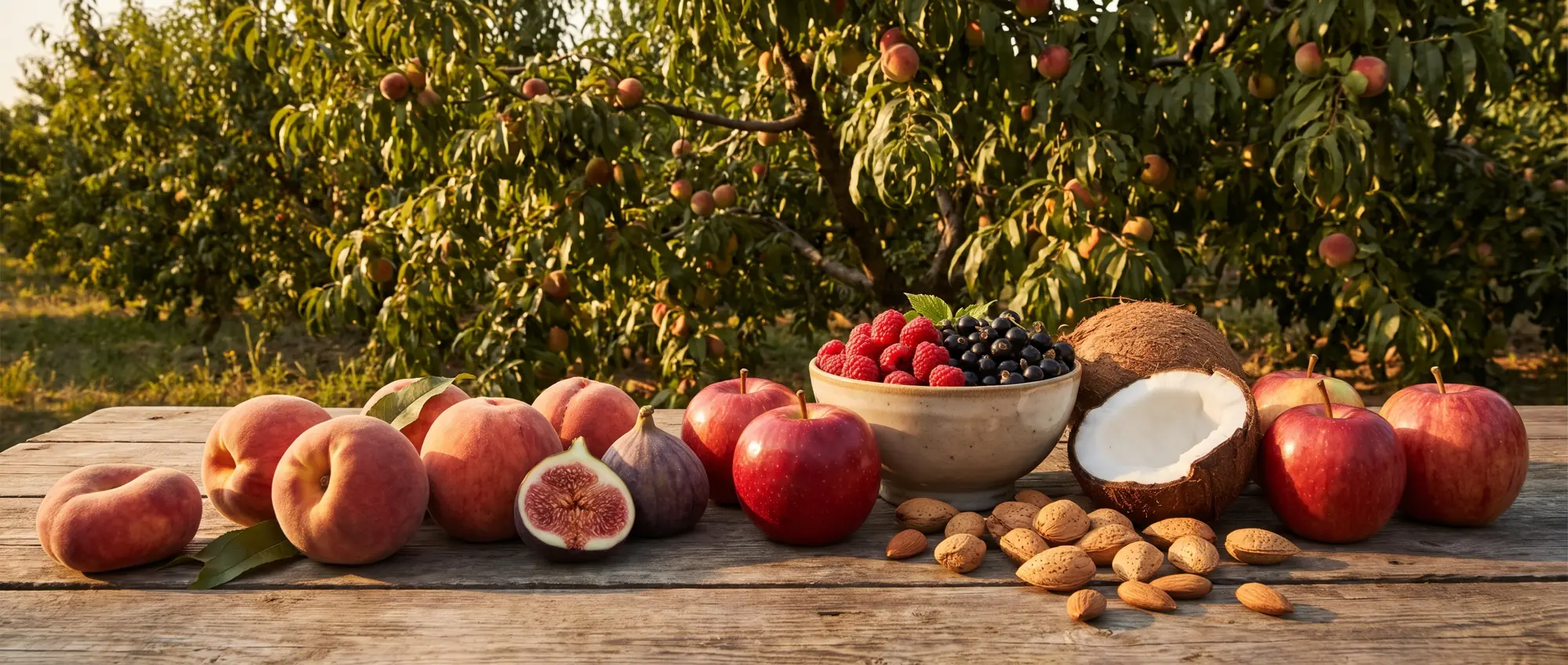
Sweet and juicy, with a velvety, creamy lactonic feel and a soft powdery edge. It can open slightly green, then turn floral and warm, and settle into a peachy, faintly coconut-like sweetness. A hint of bitter almond comes from the kernel.
In perfumery
Perfumers use it as a modifier that adds warmth and fruit without turning candied, a softer alternative to peach. Most often it is placed in the top or heart. It is paired with florals such as rose and jasmine, with sandalwood and musk, and with vanilla.
Scent profile
Our read of the note, not a measurement.
Where it sits
Mostly a top and heart note.