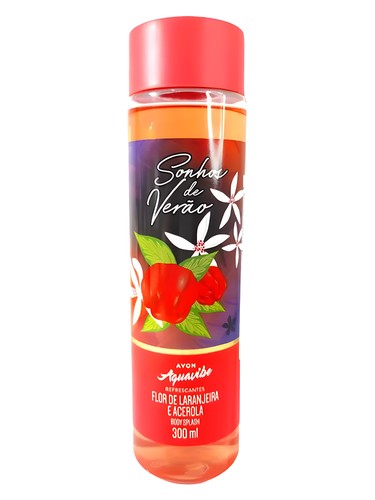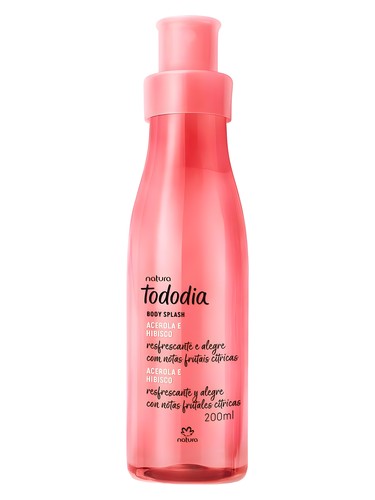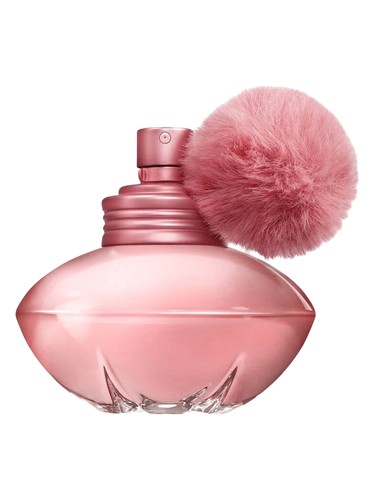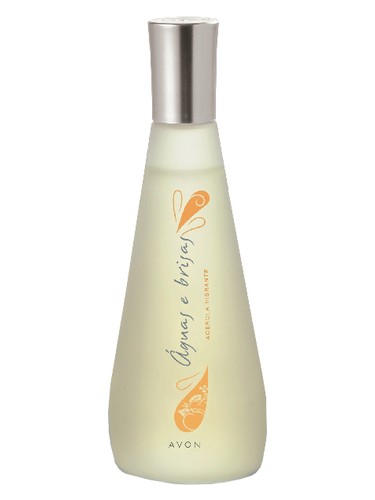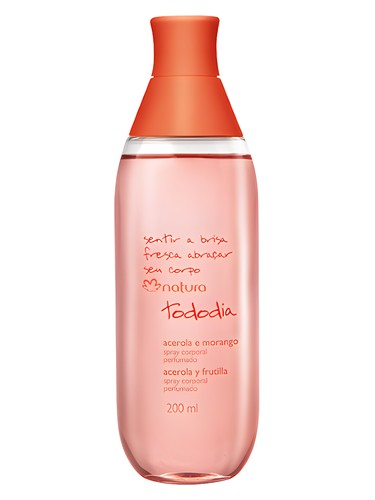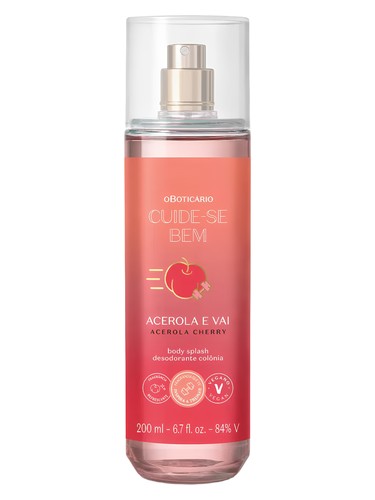
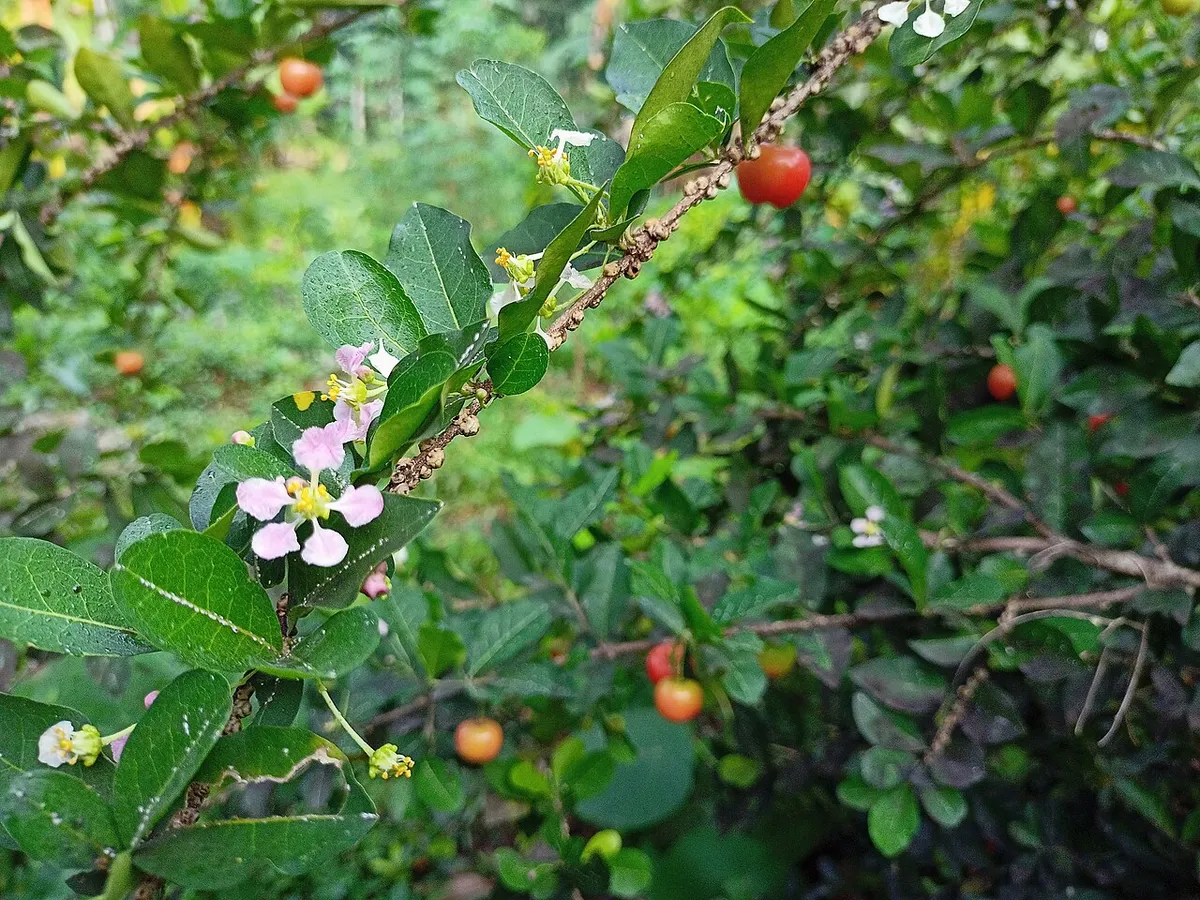

Acerola
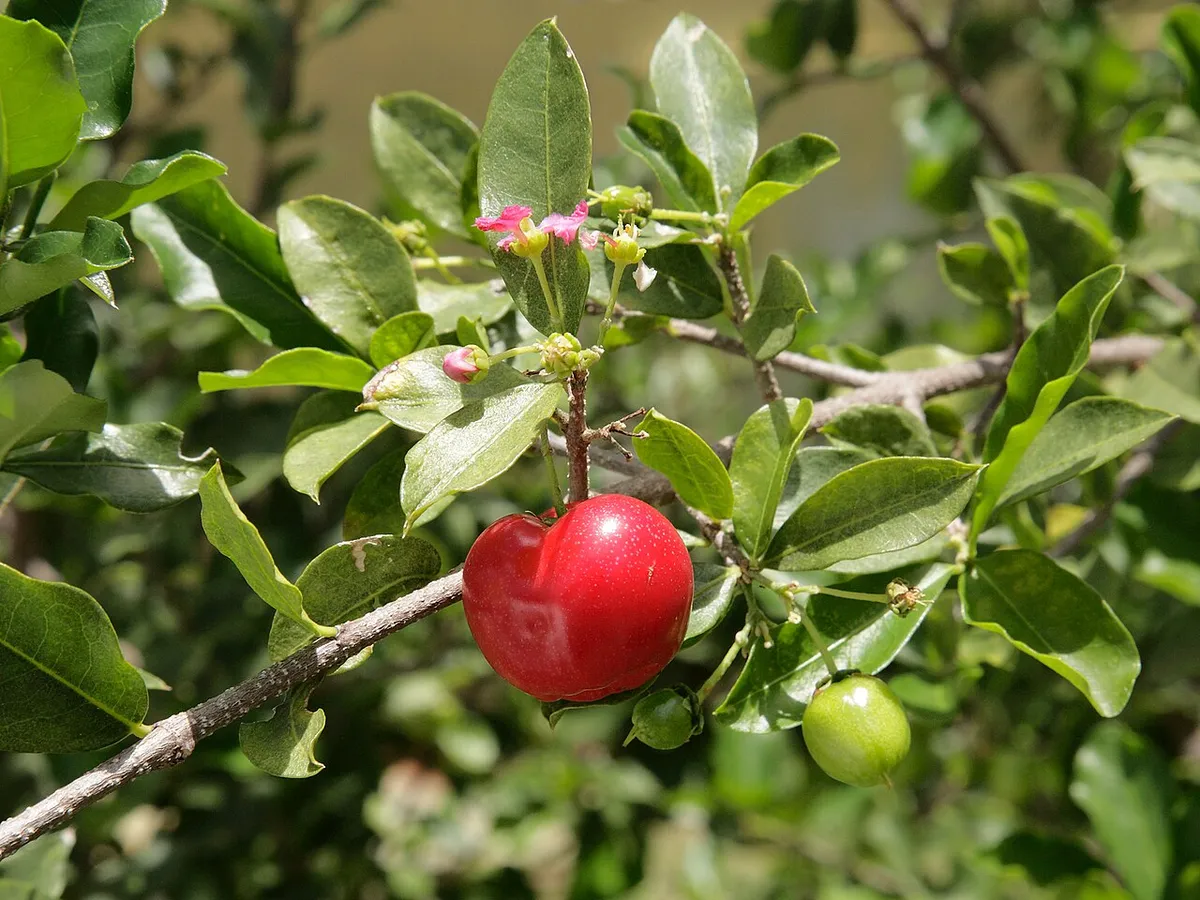
Also known as Malpighia emarginata, Acerola cherry, Barbados cherry, West Indian cherry
Photos: Eric Gaba (Sting - fr:Sting), CC BY-SA 3.0; Dr. Chinchu C., CC BY-SA 4.0
About Acerola
What it is
A synthetic accord built to suggest the tart red fruit of the acerola shrub. The fruit is natural, but the perfume note is a fantasy accord rather than an extract of the fruit.
Where it comes from
The acerola shrub, Malpighia emarginata, is native to the Lesser Antilles and extends into South America as far as Brazil. Brazil is its largest producer, with Barbados, Trinidad and Tobago and Haiti also listed as growing countries.
What it smells like
The first impression is sharp and tart, like a red berry or cherry with a raspberry-like edge. It has a slightly bitter finish, so it reads as fresher and less sugary than a ripe sweet fruit.
In perfumery
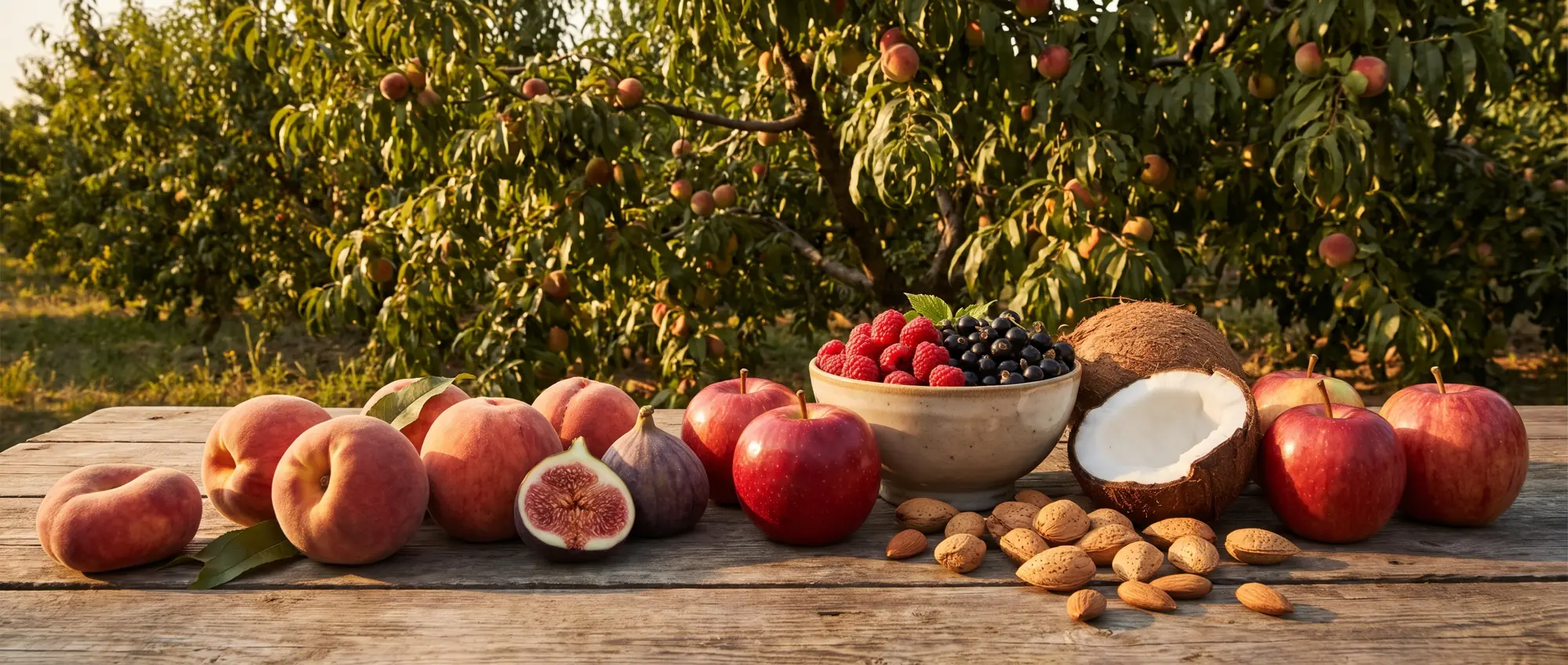
Perfumers use acerola for a quick burst of tart, fruity freshness at the start of a composition. It is often paired with bergamot, mandarin orange and lemon, and it can also sit beside jasmine and orange blossom in fruity floral work.
Scent profile
Our read of the note, not a measurement.
Where it sits
Mostly a top note.