

Pittosporum
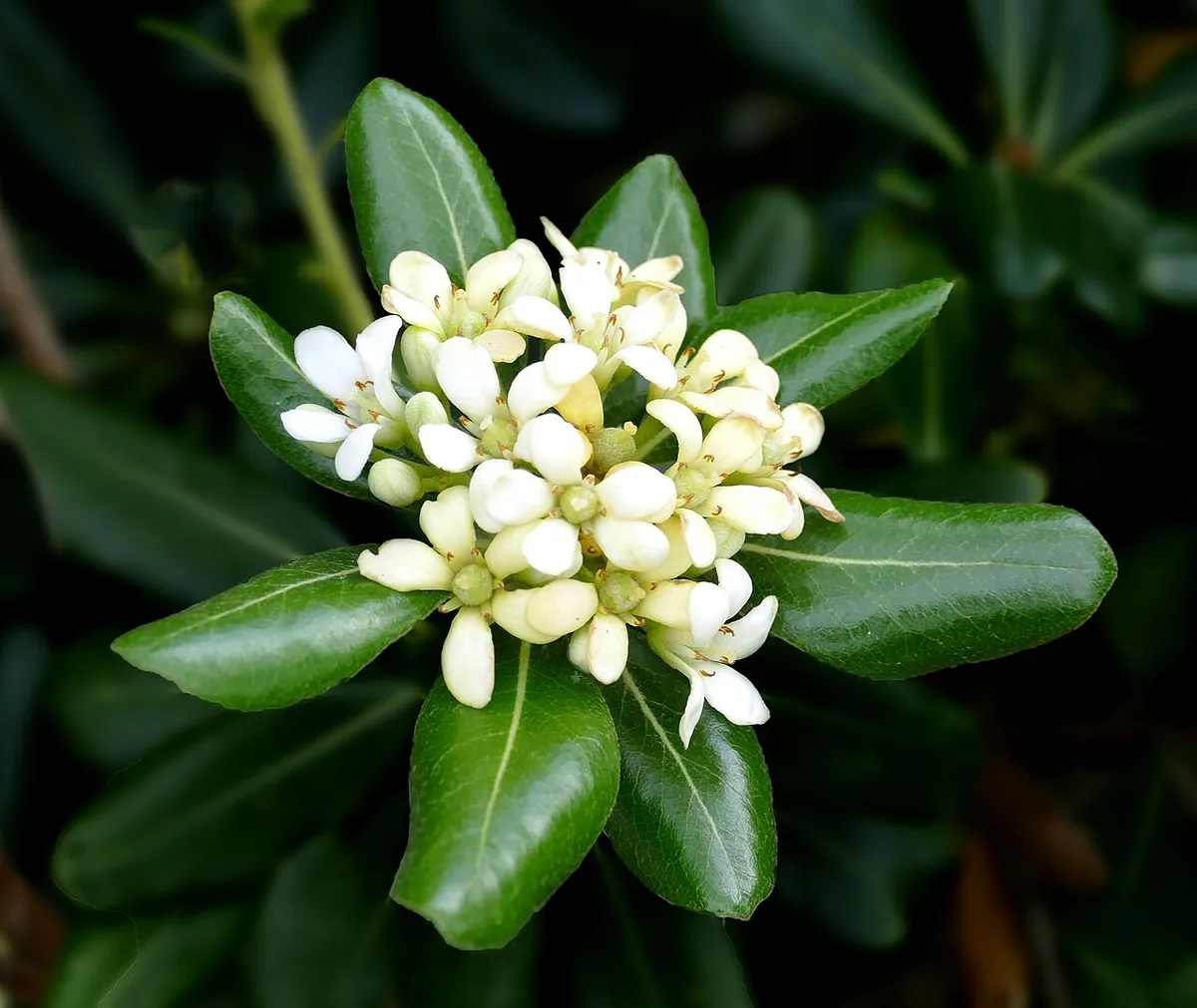
Also known as Japanese pittosporum, mock orange, Pittosporum tobira
Photos: Jim Evans, CC BY-SA 4.0; Victor M. Vicente Selvas, Public domain
About Pittosporum
What it is
Pittosporum is the name perfumers use for the small, clustered white blossoms of the pittosporum shrub, most often Pittosporum tobira. The flowers yield very little oil and their volatile compounds are fragile, so a natural absolute is rarely made. Most of what goes into a composition under this name is an accord built from other materials.
Where it comes from
Pittosporum tobira is native to Japan south of Kanto, China, Taiwan and Korea, and is now grown worldwide as an ornamental shrub. Where a natural absolute exists, it is a waxy concrete from solvent extraction that gives a golden-yellow absolute, but perfumers rely mainly on reconstruction.
What it smells like
Sweet, creamy and warm, close to orange blossom but richer and less sharp, with a honeyed, faintly vanilla quality. It turns more jasmine-like after a few hours, and on warm, still evenings it can seem almost narcotic.
In perfumery
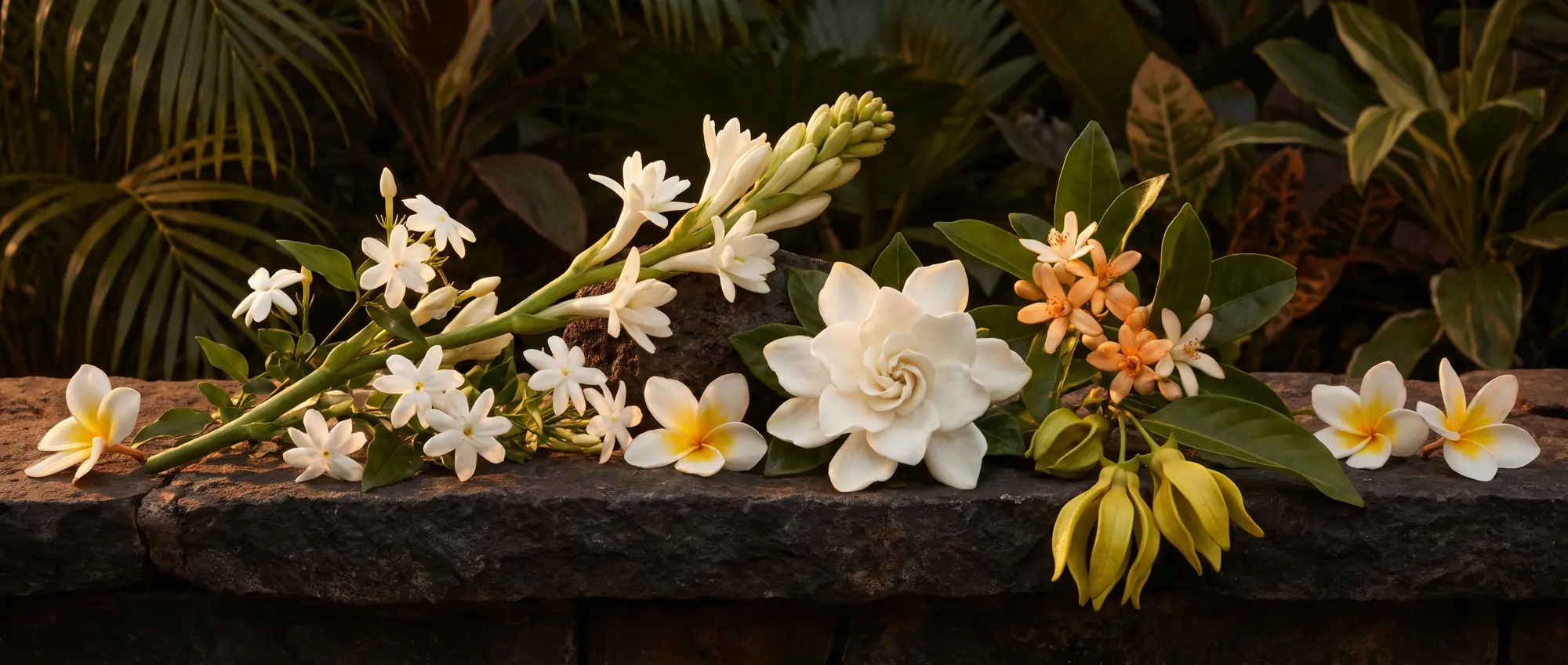
Pittosporum usually supports white florals, adding warmth and creaminess under jasmine or tuberose. Some niche perfumers make it the lead, often to suggest a Mediterranean garden. It is often paired with jasmine, neroli, orange blossom, sandalwood, vanilla and amber, and it sits poorly beside sharp citrus or dry woods.
Scent profile
Our read of the note, not a measurement.
Where it sits
Mostly a heart note.