
Petroleum
Also known as crude oil, rock oil, Seneca oil, black gold
Photos: Nefronus, CC0
About Petroleum
What it is
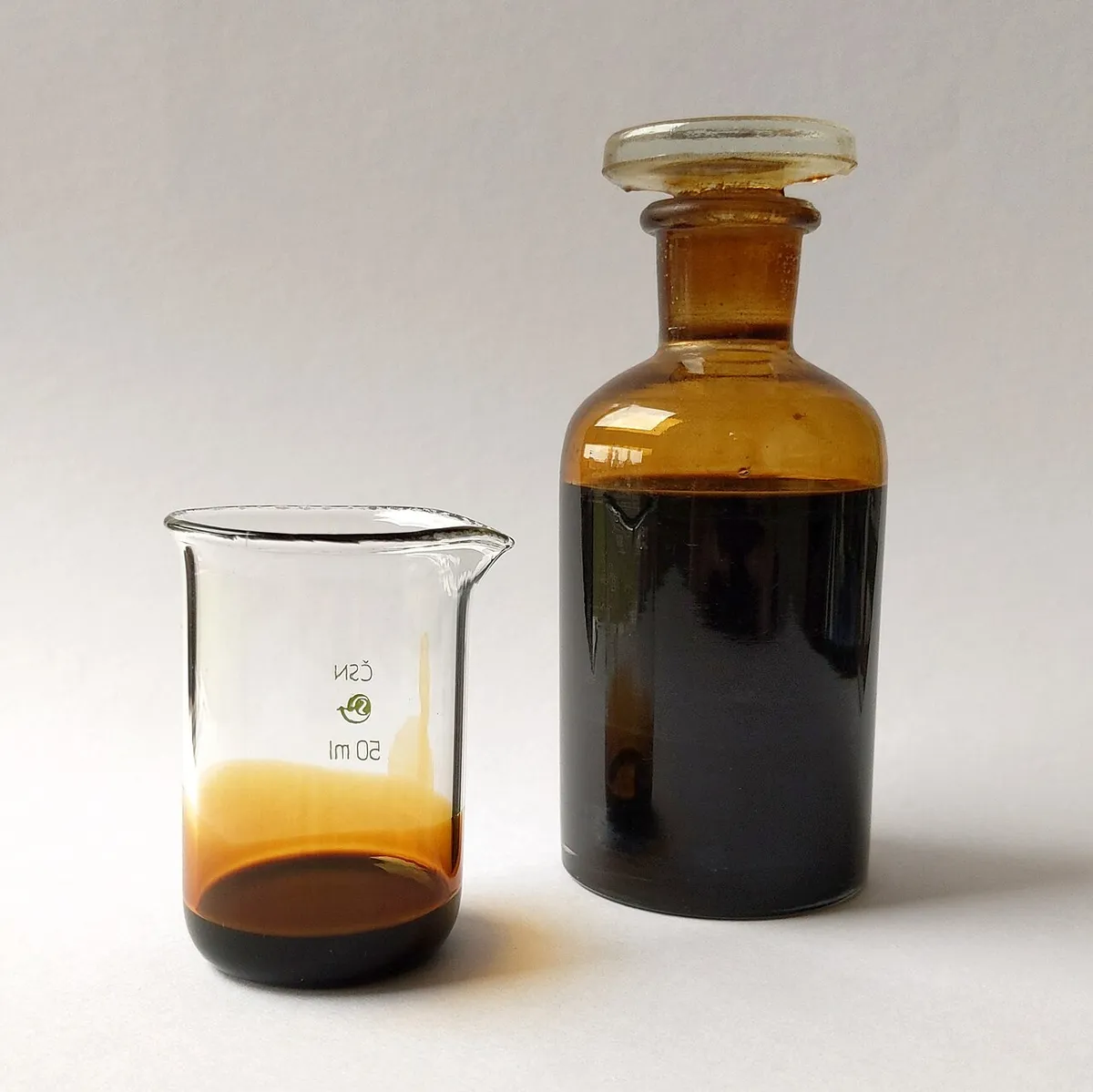
Petroleum in perfumery is a built accord, not an extract. It imitates crude oil, a natural mixture of alkanes, cycloalkanes and aromatic hydrocarbons that refineries split by distillation into fuels such as gasoline and kerosene.
Where it comes from
The raw material is crude oil from underground deposits, refined by fractional distillation. Perfumers recreate its smell rather than extract it from the crude.
What it smells like
The first impression is oily and chemical, close to petrol on a garage floor. Over a few hours it turns kerosene-like, with a sweet and slightly acrid edge.
In perfumery
Perfumers use it as a dark, fuel-like accent that adds grit to a composition and keeps sweet notes from reading too soft. It is often paired with bergamot, damask rose and ambergris, and sometimes with agarwood.
Scent profile
Our read of the note, not a measurement.
Where it sits
Mostly a top note.