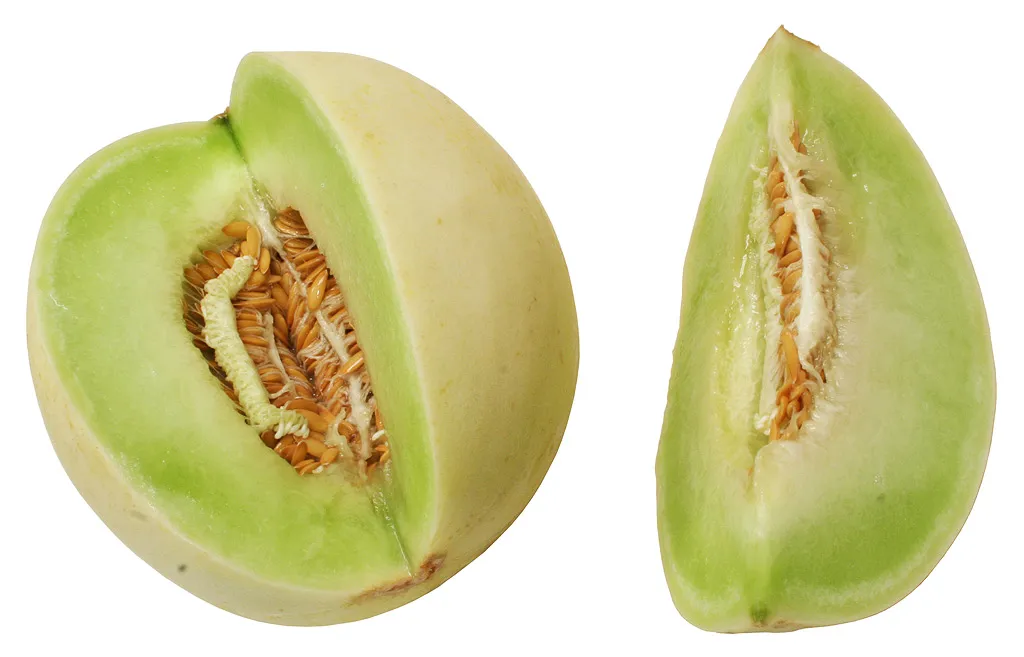

Honeydew Melon
Also known as Cucumis melo var. inodorus, Melon miel
Photos: Yotoen, Public domain
About Honeydew Melon
What it is
Honeydew melon is a composed accord built from aroma chemicals. The fruit yields no essential oil suitable for distillation, so perfumers recreate its watery flesh rather than extract it.
Where it comes from
The fruit is a smooth-rinded melon of the Inodorus group of Cucumis melo, grown in semiarid climates in places such as France, Algeria and China. The perfume version is a lab accord with no single maker, built around melonal, a molecule first introduced by Givaudan.
What it smells like
The first impression is cool, clean and watery, with a green cucumber-like freshness. It settles into a softer sweet, slightly oily and waxy tone, with a faint floral edge and a marine, ozone-like air.
In perfumery
Perfumers use honeydew to add a juicy, fresh fruitiness that reads as the flesh of the melon rather than its peel. It lifts and opens a blend and works well beside bergamot and pink pepper for brightness, and beside jasmine and peony for a soft floral heart. Galbanum and cedarwood give it a greener, drier base.
Scent profile
Our read of the note, not a measurement.