
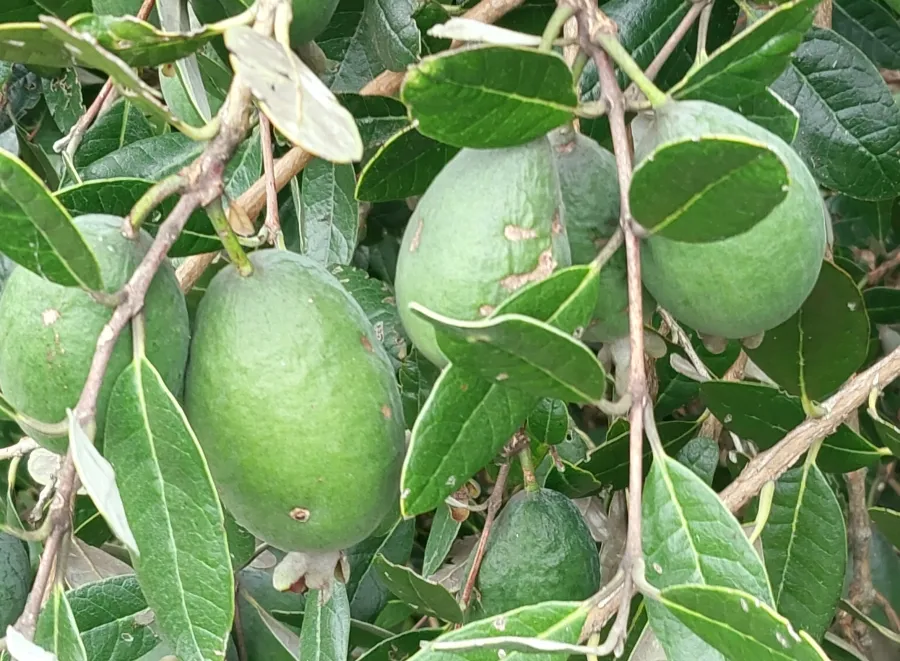

feijoa fruit
Also known as Feijoa sellowiana, Acca sellowiana, pineapple guava
Photos: Didier Descouens, CC BY-SA 4.0; Sarang 선순, Public domain
About feijoa fruit
What it is
Feijoa fruit is a note built from the ripe fruit of the feijoa shrub, Feijoa sellowiana. Perfumers rarely work from a natural extract, so the smell is usually rebuilt from isolates and synthetic esters.
Where it comes from
The feijoa is native to the mountains of southern Brazil, northern Argentina, western Paraguay and Uruguay. It is now also grown in New Zealand, France and parts of the United States, and New Zealand is where its juice is used in commercial blends.
What it smells like
The fresh fruit smells green and sweet, with a pineapple and guava edge and a faint minty lift. Its main compound, methyl benzoate, gives it a clean, slightly medicinal character that is closer to a perfume than to most fruit. The smell is strongest on the first impression and softens into a creamy, faintly floral trail.
In perfumery
Perfumers use feijoa to add a bright, green-tropical lift to fruity and floral work. It is often paired with bergamot and galbanum for a fresh, sharp opening, and with cedar, musk and amber to give the fruit a softer, warmer base.
Scent profile
Our read of the note, not a measurement.
Where it sits
Mostly a top note.