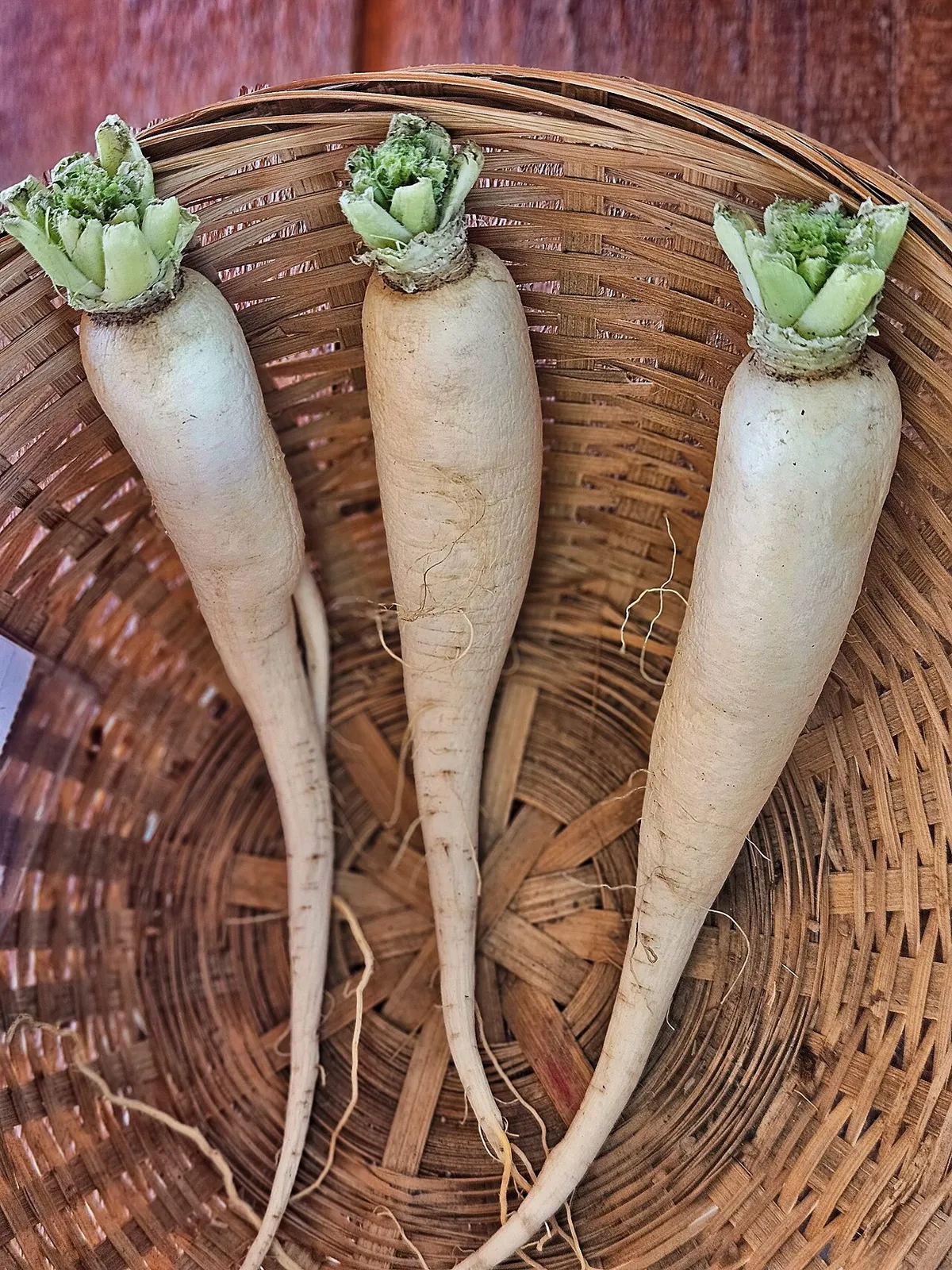
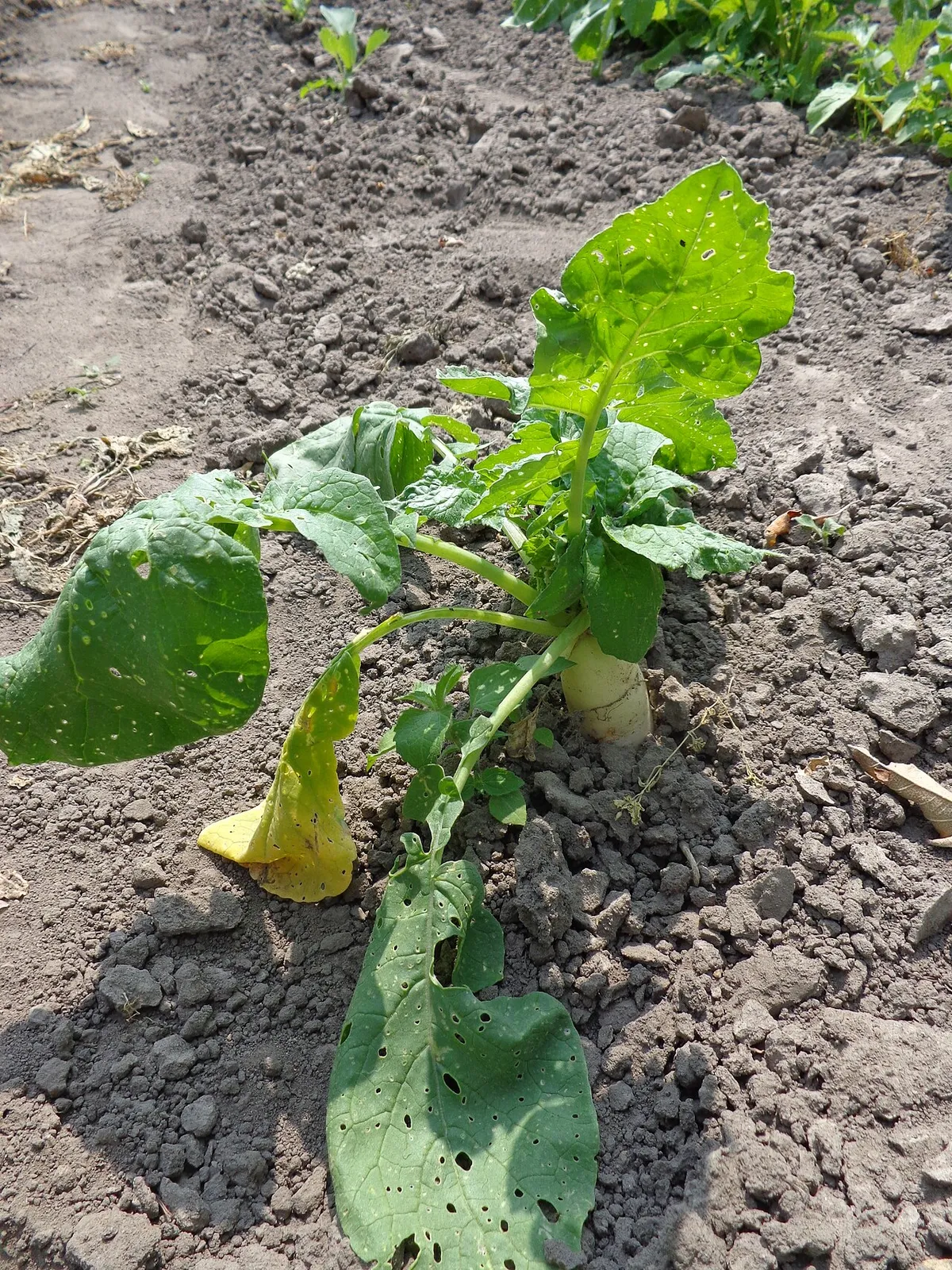

Daikon radish
Also known as 4-methylthio-3-butenyl isothiocyanate, MTBITC
Photos: Eric Polk, CC BY-SA 4.0; AfroBrazilian, CC BY-SA 3.0
About Daikon radish
What it is
Daikon radish is not an essential oil or natural absolute for perfumery. It is a synthetic accord built around isothiocyanate compounds, the pungent substances found in radish root.
Where it comes from
The smell copies the root of daikon, a long white radish grown in East Asia. Its key aroma compound occurs naturally in radish root, mainly in the cruciferous vegetables.
What it smells like
The first impression is crisp, watery and green, with an earthy edge and a little pepper. As it develops, it turns sharper and more sulfurous, closer to cooked radish or cabbage.
In perfumery
Perfumers use it as a heart note that adds a fresh, vegetal lift and a savoury bite. It is often paired with galbanum, lemon and jasmine, where it adds a cool, green edge to floral and citrus structures.
Scent profile
Our read of the note, not a measurement.