
About Bakhoor
What it is
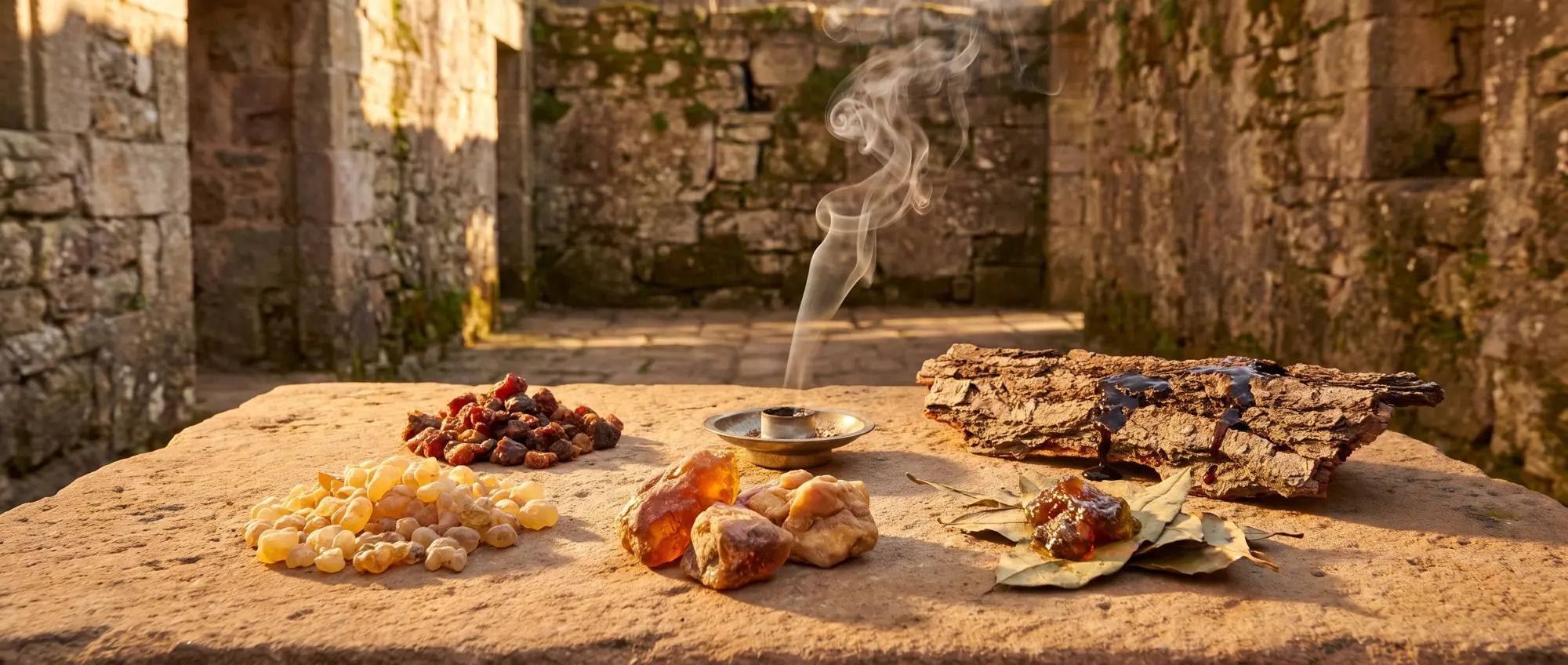
Bakhoor is a prepared incense rather than a distilled oil. It is wood chips, traditionally agarwood, soaked in fragrant oils and blended with resins, then formed into chips, blocks or pastilles and burned. Paste versions bind powdered incense with a soft binder such as dried fruit, honey or soft resin.
Where it comes from
Bakhoor comes from the Arabian Gulf, where the word derives from an Arabic term meaning to fumigate or perfume with smoke. Blends differ by city, so the styles of Riyadh, Abu Dhabi and Muscat are not the same.
What it smells like
Bakhoor opens warm and smoky with a touch of sweetness. Over hours it turns woody and balsamic with a hint of vanilla, and over days it settles into musky, leathery notes with an amber edge. Its core character is the smoke of burning agarwood.
In perfumery
Perfumers use bakhoor as a reconstructed incense accord to suggest the smoke of burning oud, giving depth and a smoky, woody-amber base to oud and oriental compositions. Because real burning cannot be reproduced in a bottle, it is usually rebuilt from oud, frankincense, labdanum and benzoin. It is often paired with rose, saffron, leather and vanilla.
Scent profile
Our read of the note, not a measurement.
Where it sits
Mostly a heart and base note.