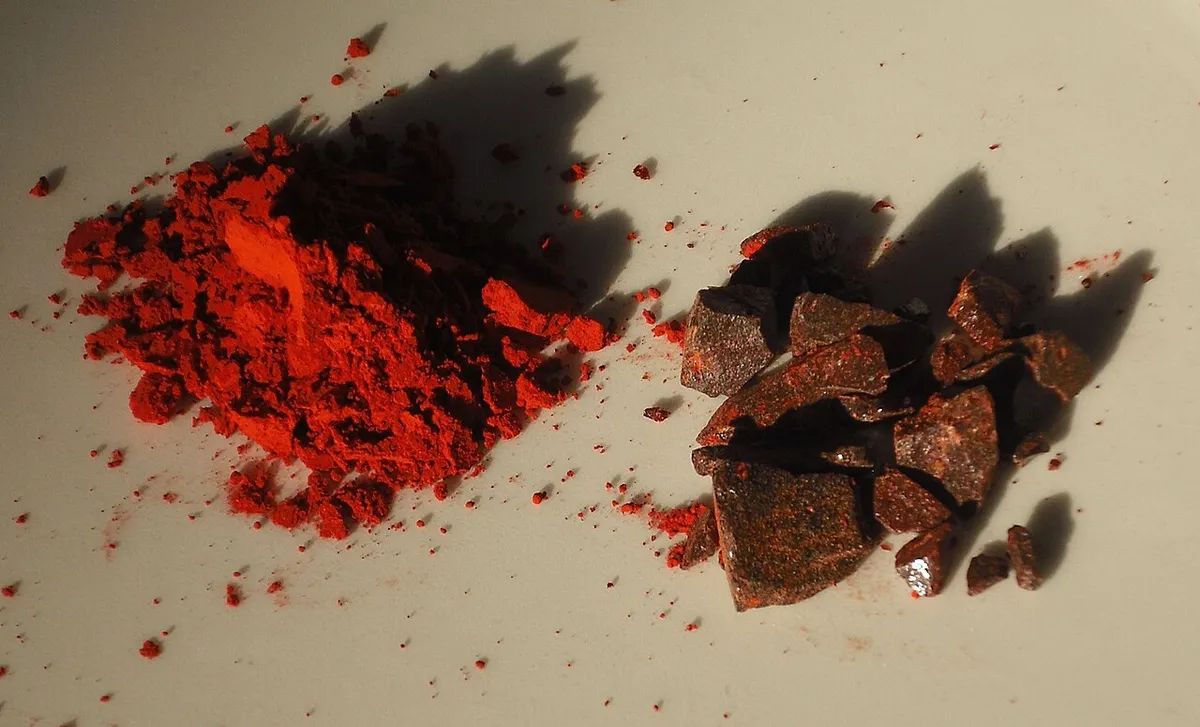

Dragon Blood Resin
Also known as Calamus draco, Daemonorops draco
Photos: Andy Dingley, CC BY-SA 3.0
About Dragon Blood Resin
What it is
A red resin. The commercial material is exuded from the scales on unripe fruit of the rattan palm Daemonorops draco, now Calamus draco, collected and pressed into balls or cakes. A second resin of the same name comes from the tree Dracaena cinnabari.
Where it comes from
The rattan resin comes from Southeast Asia, with supply from Sumatra, the Riau Archipelago, Borneo and Malaysia. The Dracaena resin is tapped from wounds in trees endemic to Socotra, Yemen.
What it smells like
The pure resin has very little odour at room temperature, so its scent shows mainly in alcohol tinctures. The rattan type reads sweet, balsamic and spicy, with a dry cinnamon-bark edge. The Socotra type is drier, woodier and faintly chalky.
In perfumery
Perfumers use dragon's blood mainly to add warmth and depth near the base of a blend, and to fix lighter notes. It is also used to colour oils red to dark brown. It is often paired with amber, patchouli, benzoin, olibanum, vanilla and agarwood.
Scent profile
Our read of the note, not a measurement.
Where it sits
Mostly a top and base note.