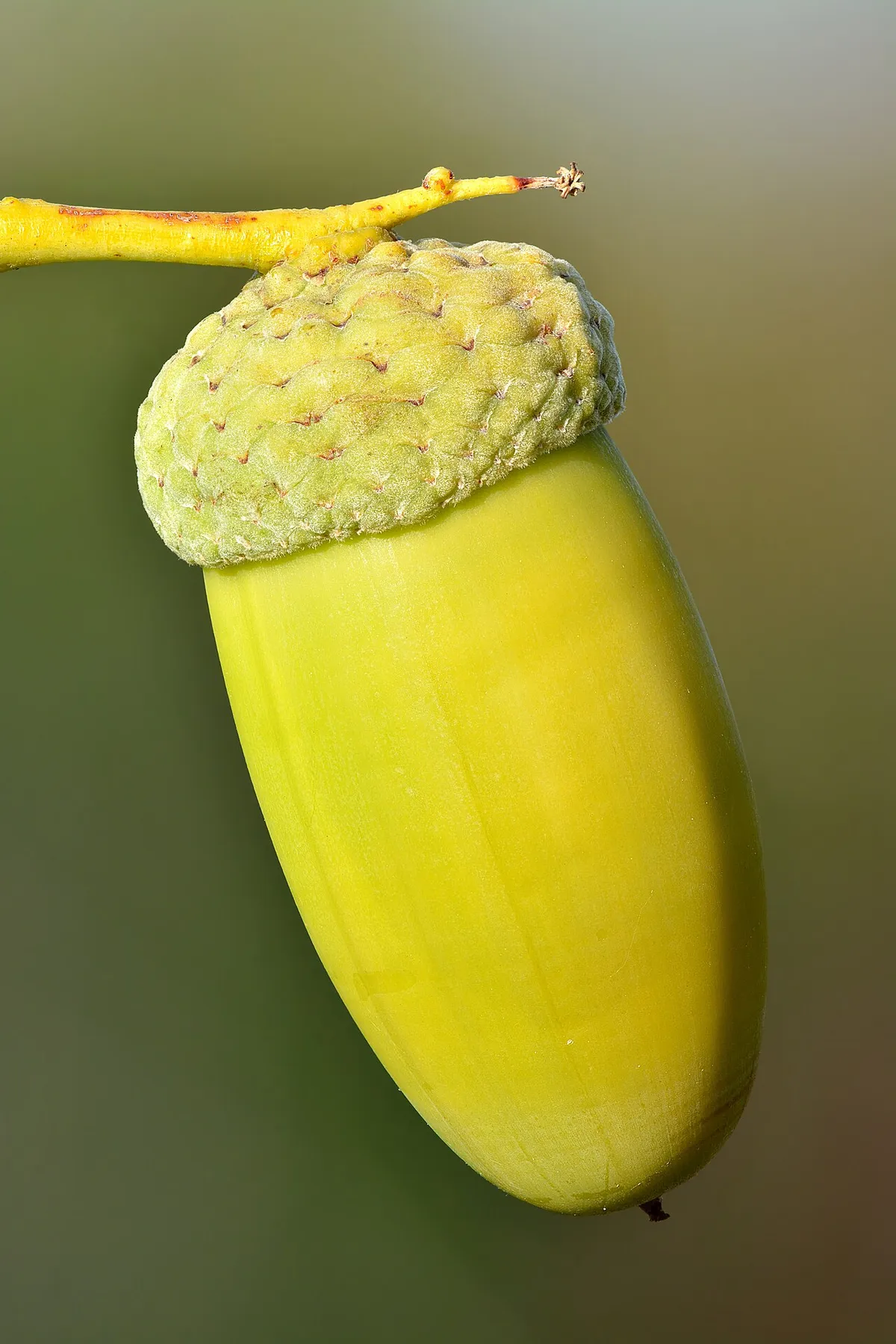
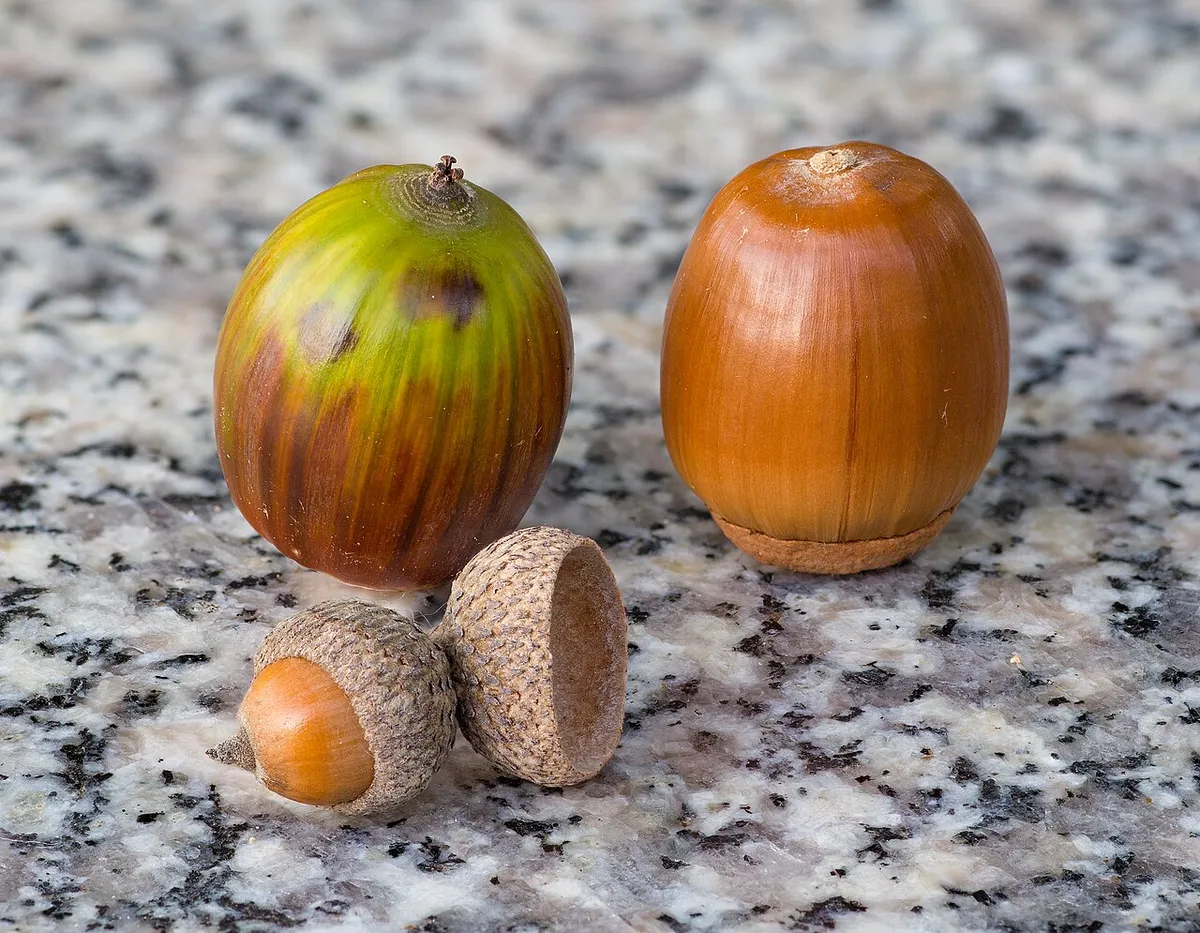

Acorn
Also known as acorn acetate, 1-ethynylcyclohexyl acetate
About Acorn
What it is
A synthetic aroma molecule, 1-ethynylcyclohexyl acetate, made in the lab. Perfumers do not use an essential oil or absolute pressed or extracted from acorns.
Where it comes from
Acorn is a laboratory compound built to copy the smell of acorns. It is made from a synthetic molecule rather than from the nut itself.
What it smells like
It opens dry and herbal, with hay and dry oak leaves. After a few hours it turns woody with an immortelle edge, and over days it settles into the nutty, faintly sweet smell of the acorn itself, like a forest floor in autumn.
In perfumery
Perfumers use acorn to add a dry, nutty woodiness and an autumnal feel to a composition. It is often paired with hay, benzoin, amber and iris.
Scent profile
Our read of the note, not a measurement.